The House Beneath the North Face
At the Hotel Bellevue des Alpes, the golden age of mountain travel has never quite checked out.
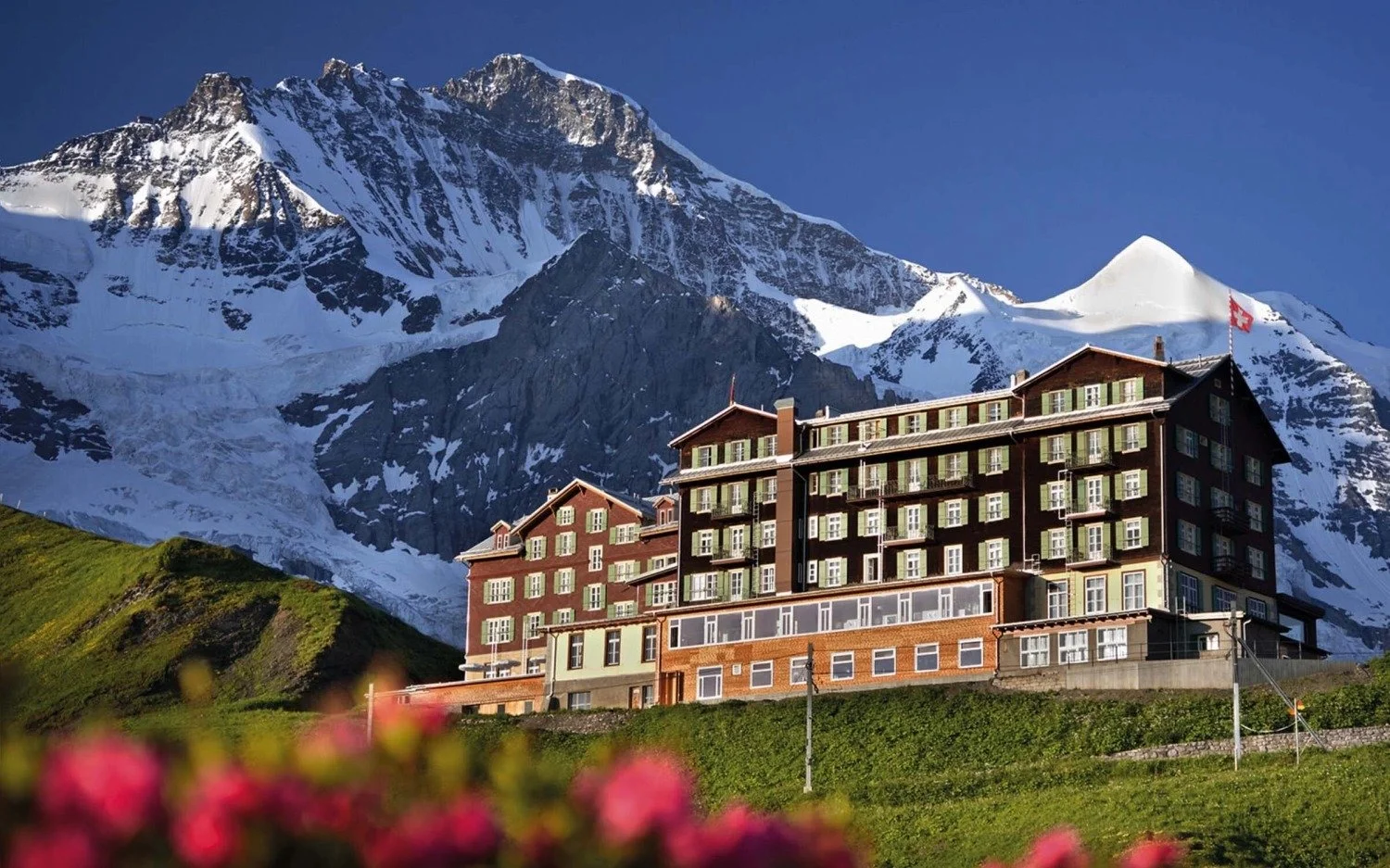
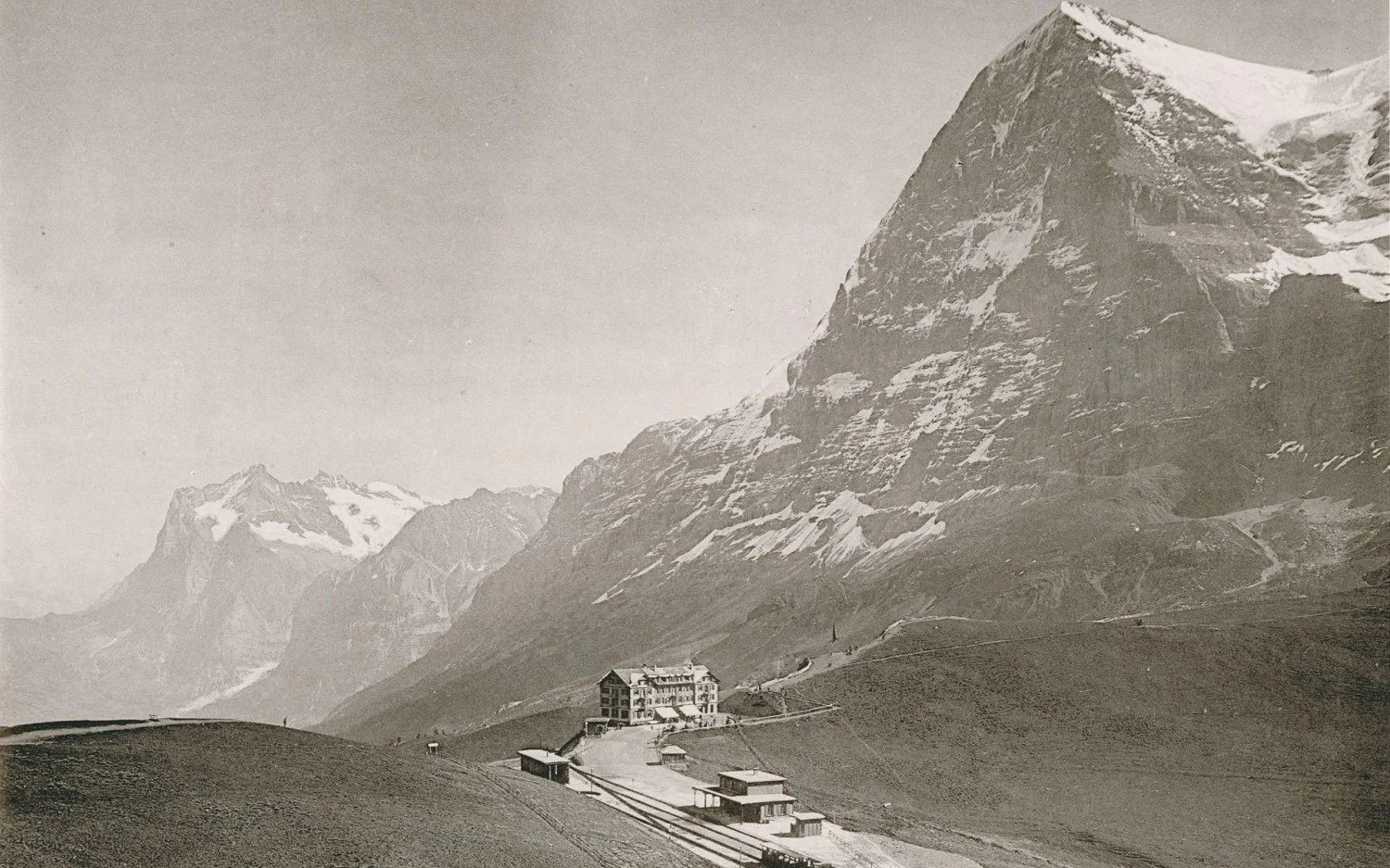
There are hotels that borrow the language of history, and there are hotels in which history remains a practical matter: a key turned in a heavy lock, a dining-room chair drawn across old boards, a train timetable consulted before dusk. The Hotel Bellevue des Alpes belongs to the latter order. It stands at Kleine Scheidegg, high above the valleys of Grindelwald and Wengen, with the Eiger's north face rising beyond it like an immense grey curtain. One does not arrive here by sweeping drive or discreet limousine. One comes by cog railway, stepping onto the platform with luggage, skis and a sudden awareness that the mountain has taken possession of the view.
This is not simply a charming inconvenience. It is the first act in the hotel's ceremony. The railway separates the Bellevue from ordinary life and places it in a landscape governed by weather, altitude and the last train down. By the time its long pale facade and green shutters come into sight, the guest has already surrendered a little modern autonomy. That surrender is part of the pleasure.
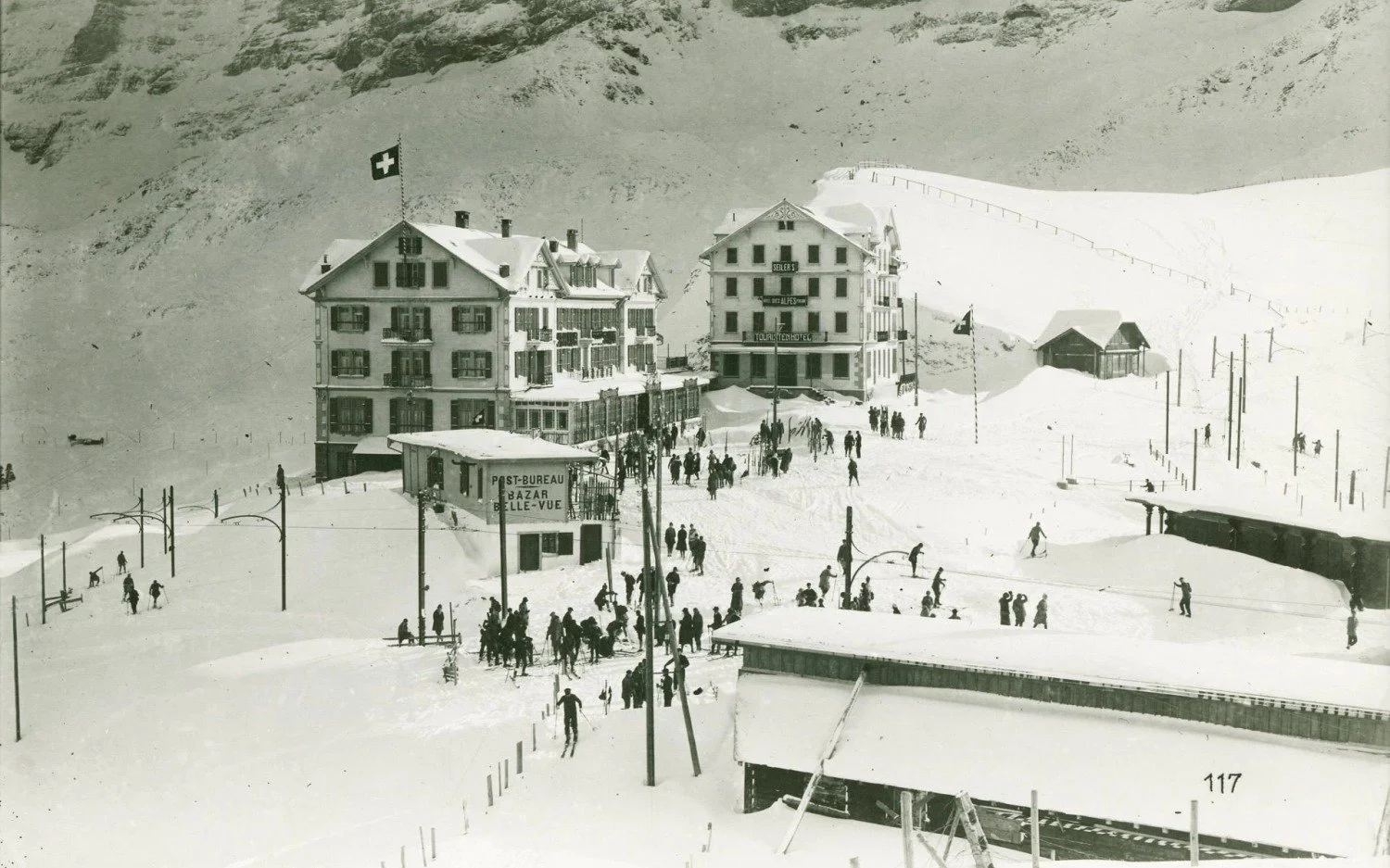
The Bellevue's beginnings reach back to the opening decades of alpine tourism. Around 1840, Christian Seiler acquired an inn known as Zur Gemse, or the Chamois, and developed the hostelry that became the Hotel Bellevue. In those years the high Alps were being reimagined. The terrain once crossed by farmers, traders and local guides was becoming a destination for travellers drawn by the sublime, the scientific and the strenuous. Comfort followed curiosity uphill, first by mule and footpath, then by rail.
The opening of the Wengernalp Railway in 1893 changed the tempo of the pass. Visitors could ascend with greater ease, and the architecture of hospitality grew with them. A neighbouring Hotel des Alpes eventually came into the same family's hands; by 1929 the properties had been joined under the name Bellevue des Alpes. The union gave the hotel its characteristic breadth and, with the introduction of a winter season, placed it at the centre of a new social world built around snow.
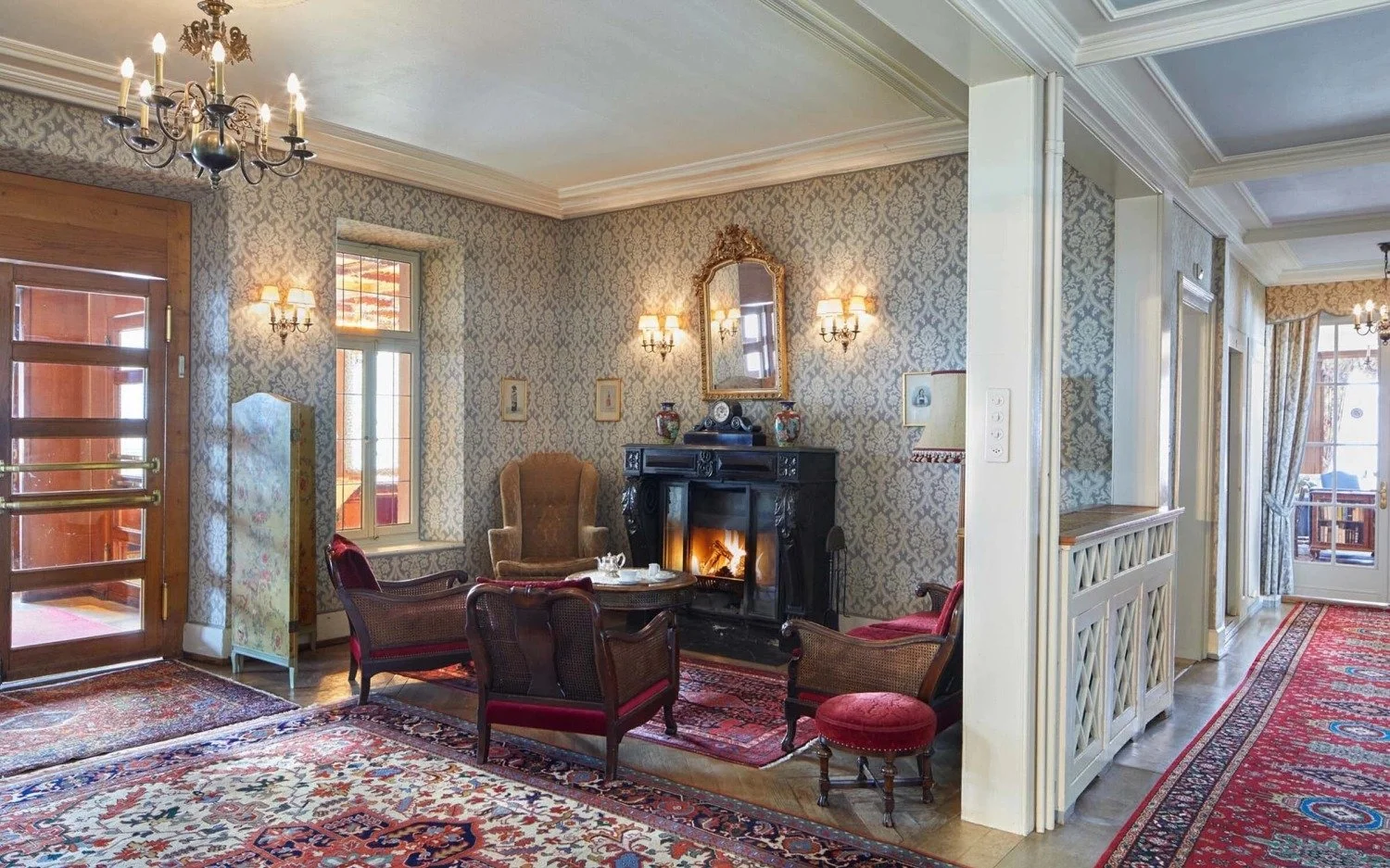
The crucial fact is that the house was not remade each time fashion changed. Its public rooms retain the accumulated grammar of the interwar grand hotel: timber, patterned paper, generous curtains, deep chairs, silver, china and light softened by shades rather than sharpened by spotlights. The rooms do not perform antiquity with theatrical distressing. They feel inherited. Floors answer a footstep; doors have weight; a rotary telephone appears less as a prop than as a small refusal to hurry.
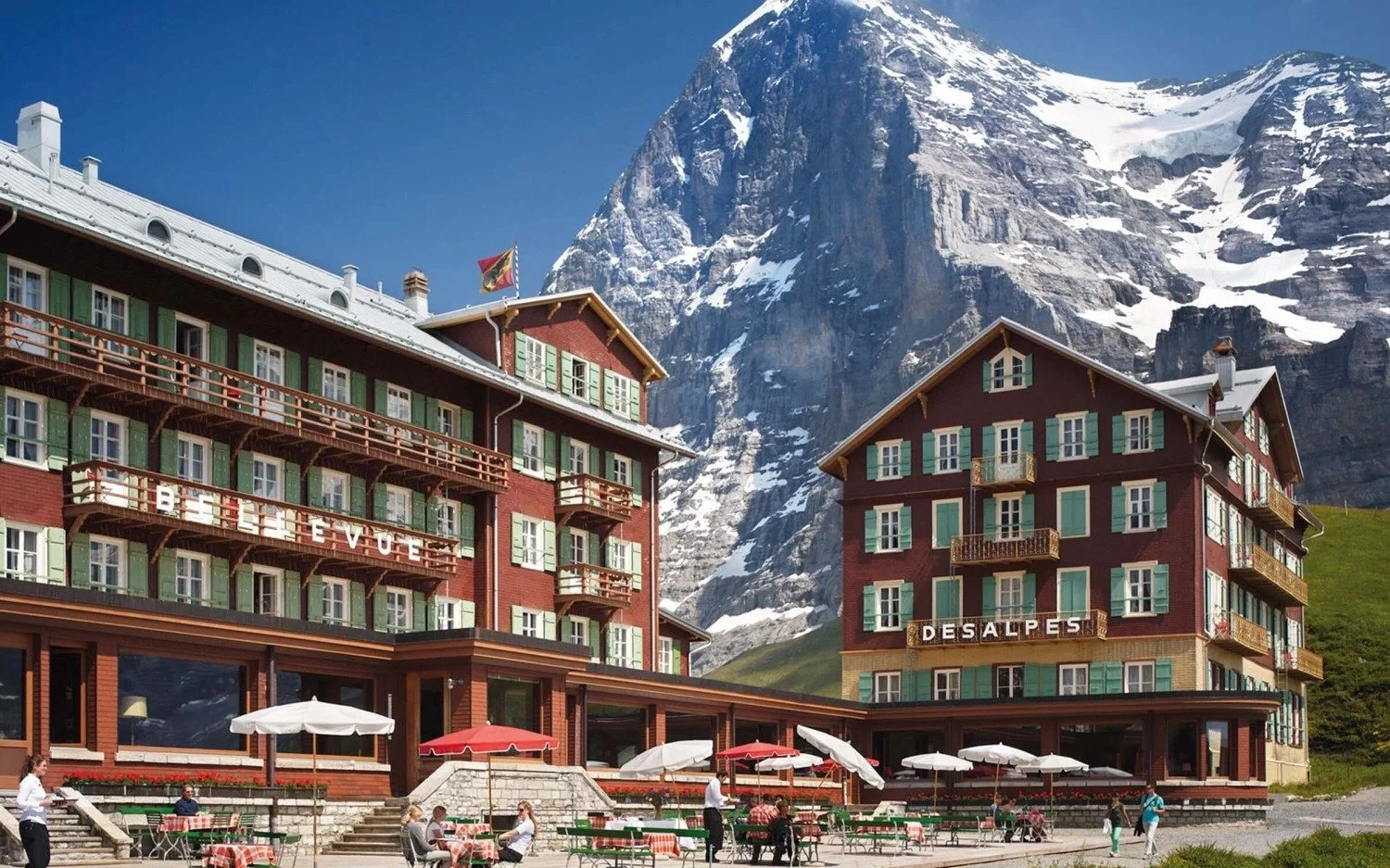
No interior, however, can compete with the wall outside. The Eiger north face dominates Kleine Scheidegg not merely as scenery but as presence. From the 1930s onward, attempts on the face made this railway pass a stage from which success, retreat and tragedy could be watched through binoculars. The mountain gave modern alpinism some of its darkest legends, and the hotel became part salon, part observatory and part waiting room.
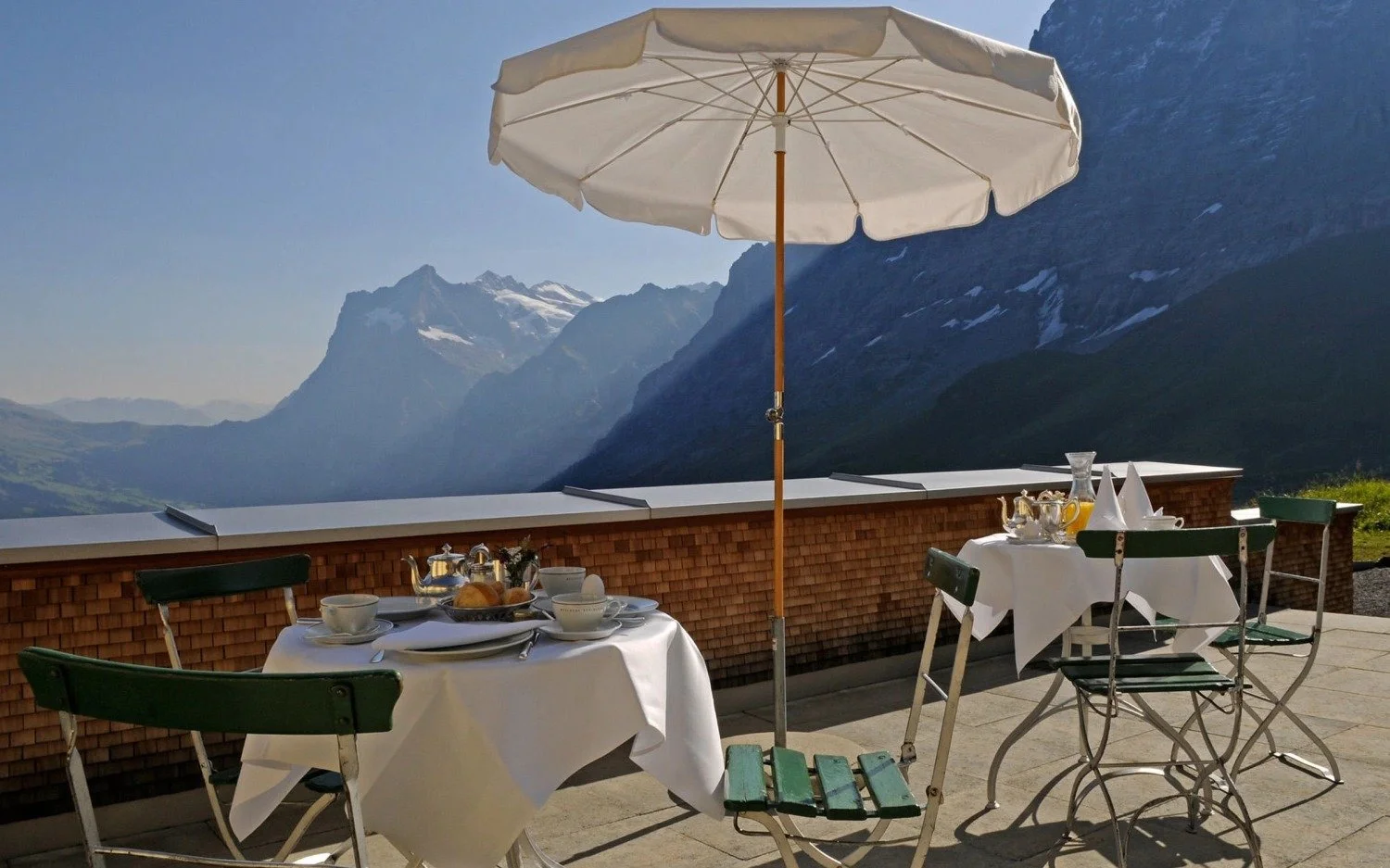
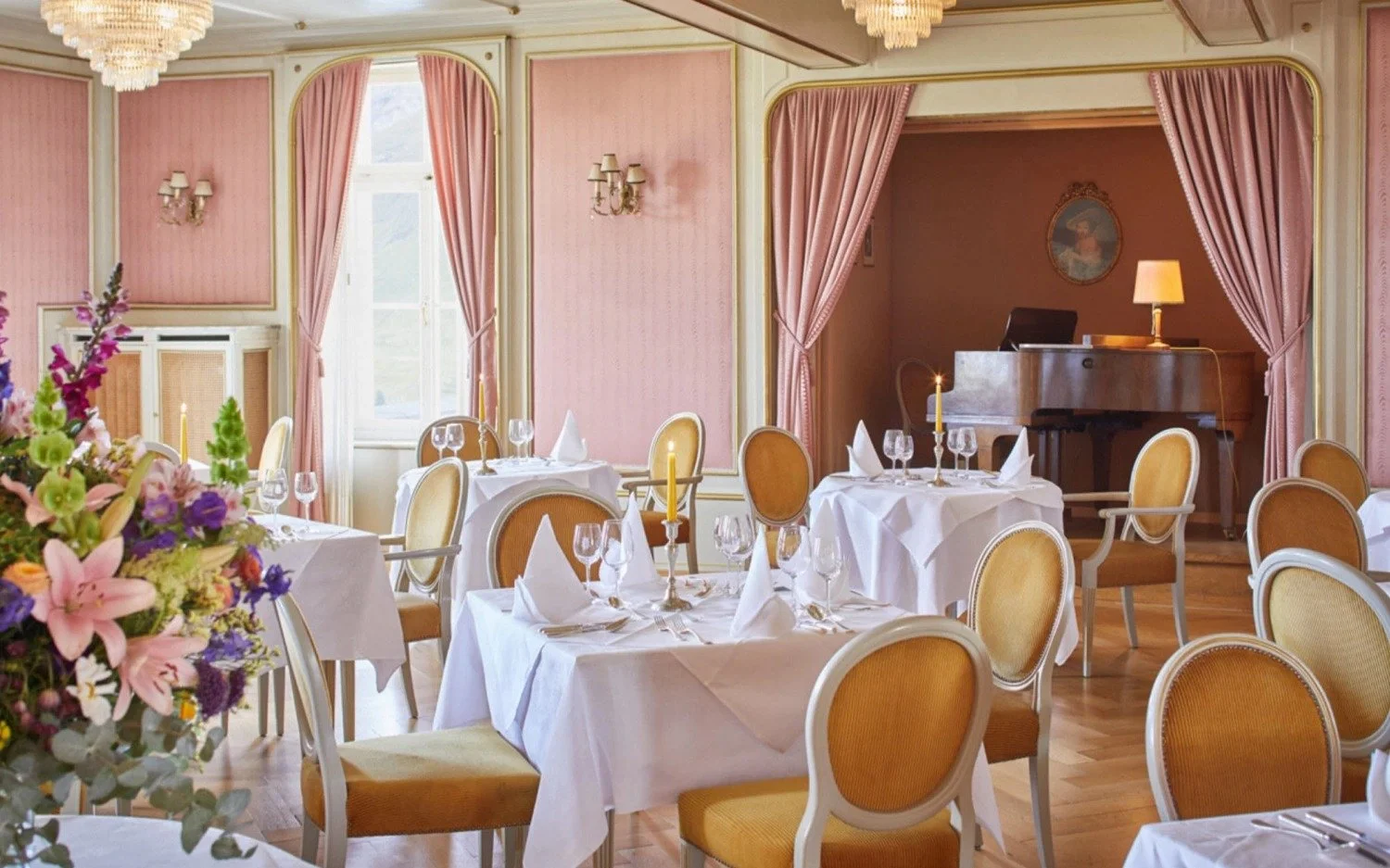
That proximity altered the meaning of luxury. In a city hotel, luxury is insulation from the world. Here it is the privilege of confronting the world from a well-set table. The dining room offers warmth and order while the face beyond remains cold, vertical and indifferent. A white cloth, a polished glass and a properly cut jacket acquire force precisely because they are set against that severity. Civilization is made visible by the wilderness pressing at the panes.
The contrast is central to the old alpine ideal. Mountaineering never belonged solely to hardship; it created its own codes of elegance. Climbers returned to hotels where technical talk mingled with dinner, where weathered hands lifted stemware and equipment dried in discreet corners. The best mountain clothes emerged from the same negotiation. They needed to function in difficult country without abandoning shape, proportion or social intelligence. A tailored wool trouser, a dense sweater, a field jacket and a coat cut to move are not costumes here. They are the descendants of a practical alpine wardrobe
The Bellevue's place in the mythology of the Eiger was sealed on film. Clint Eastwood's 1975 thriller The Eiger Sanction used the hotel and the mountain as principal locations, lodging its fictional climbing party amid the real atmosphere of Kleine Scheidegg. The film's appeal is inseparable from that authenticity: trains, terraces, climbing hardware, changing weather and the severe plane of the mountain itself. Its production also carried genuine danger; British climber David Knowles was killed by falling rock during filming on the Eiger.
Seen now, the picture is an artefact of a particular masculine glamour - technical, laconic and dressed with more care than it admits. Yet the Bellevue does not depend upon cinema for its character. The relationship runs the other way. The film borrowed the hotel's authority because the building already looked as though intrigue, rivalry and a late whisky belonged there. Location scouts did not have to invent atmosphere; they merely recognized it.
That distinction matters in an age when hotels are often designed to be photographed before they are experienced. The Bellevue's visual power comes from continuity. It has not arranged a collection of alpine signs for the camera. It is the thing those signs attempt to recall.
A stay here is shaped by ritual rather than novelty. Morning begins with light moving across snow and rock. Boots appear by the door. The railway delivers skiers and walkers to the pass, then carries them away again. In winter, the slopes draw the day outward; in summer, paths run toward the Lauberhorn, Wengen and Grindelwald. By late afternoon the transient crowd thins, and the hotel resumes its more private rhythm.
Then comes the hour the grand hotel understands better than almost any contemporary institution: the interval between exertion and dinner. It is a time for bathing, changing and assembling oneself. The day's technical layers give way to flannel, lambswool, brushed cotton and leather. A drink is taken in a room that has absorbed generations of weather reports and expedition gossip. Conversation need not compete with amplified music. The mountain remains visible, though its details fade.
This is where the Bellevue and Alps & Meters share a sensibility. Both begin with the conviction that alpine culture is not exhausted by sport. It includes the approach, the equipment, the architecture, the table and the manner in which one returns from the cold. Clothing belongs within that larger ceremony. The point is not to dress as a museum mountaineer. It is to recognize that usefulness and elegance once developed together, and may do so again.
A garment worthy of such a place should improve through use. It should look correct beside a railway carriage, in a timbered bar and on a wind-cut terrace. It should offer protection without the visual noise of pure performance gear. Most of all, it should possess enough character to join a life already rich in objects that have endured.
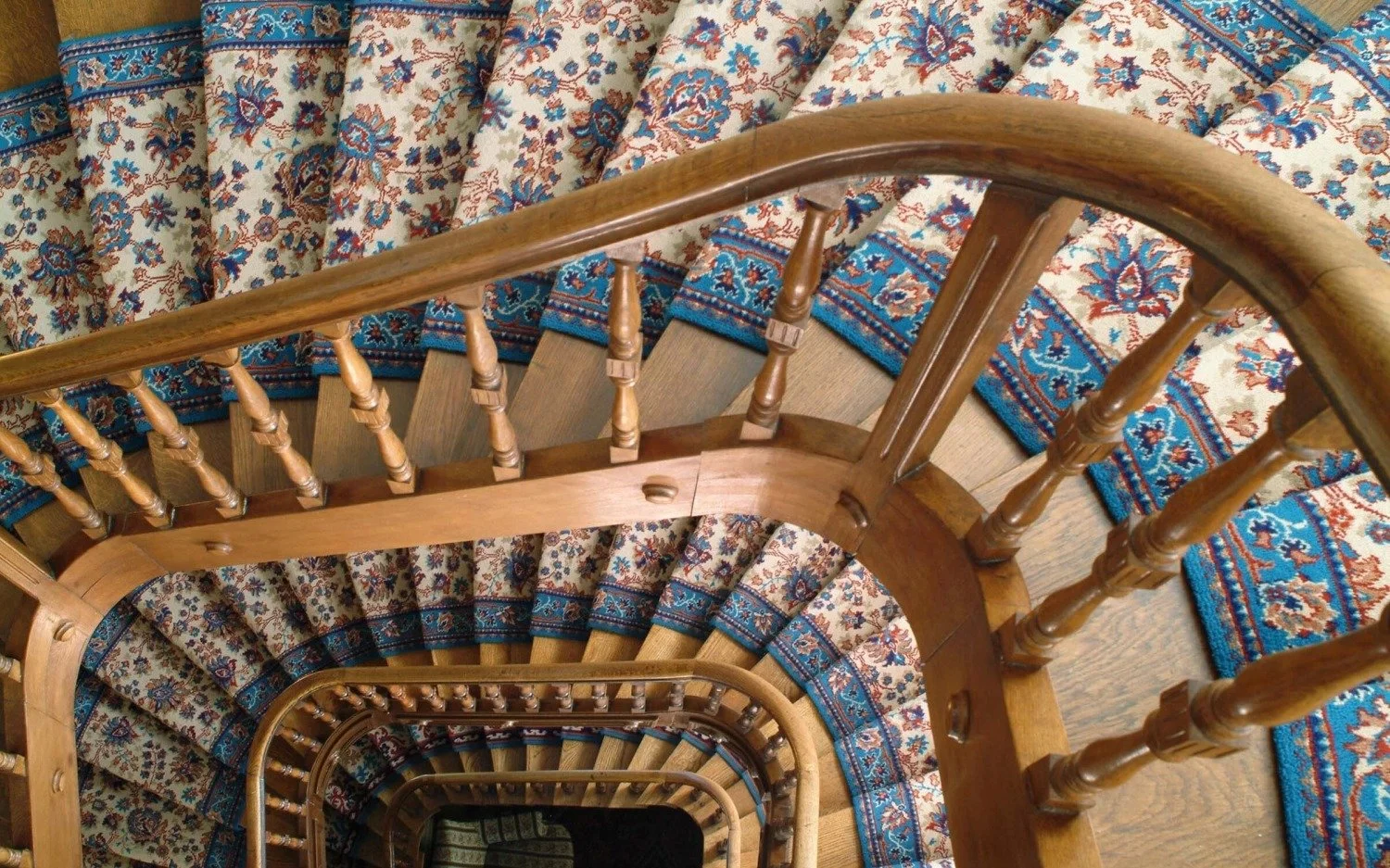
The Bellevue has remained under the stewardship of the same family line for generations, and its preservation has been recognized by Swiss Historic Hotels and by its selection as Historic Hotel of the Year in 2011. Such distinctions are deserved, but they only partly explain the hotel's fascination. Preservation can freeze a building. Hospitality must keep it alive.
Here the past is neither sealed behind velvet rope nor scrubbed into bland perfection. It continues through repetition: breakfast laid, rooms opened, snow cleared, linen pressed, trains met and guests received. The result is more elusive than luxury as abundance. It is luxury as continuity - the reassurance that a place has standards older than one's arrival and will retain them after one's departure.
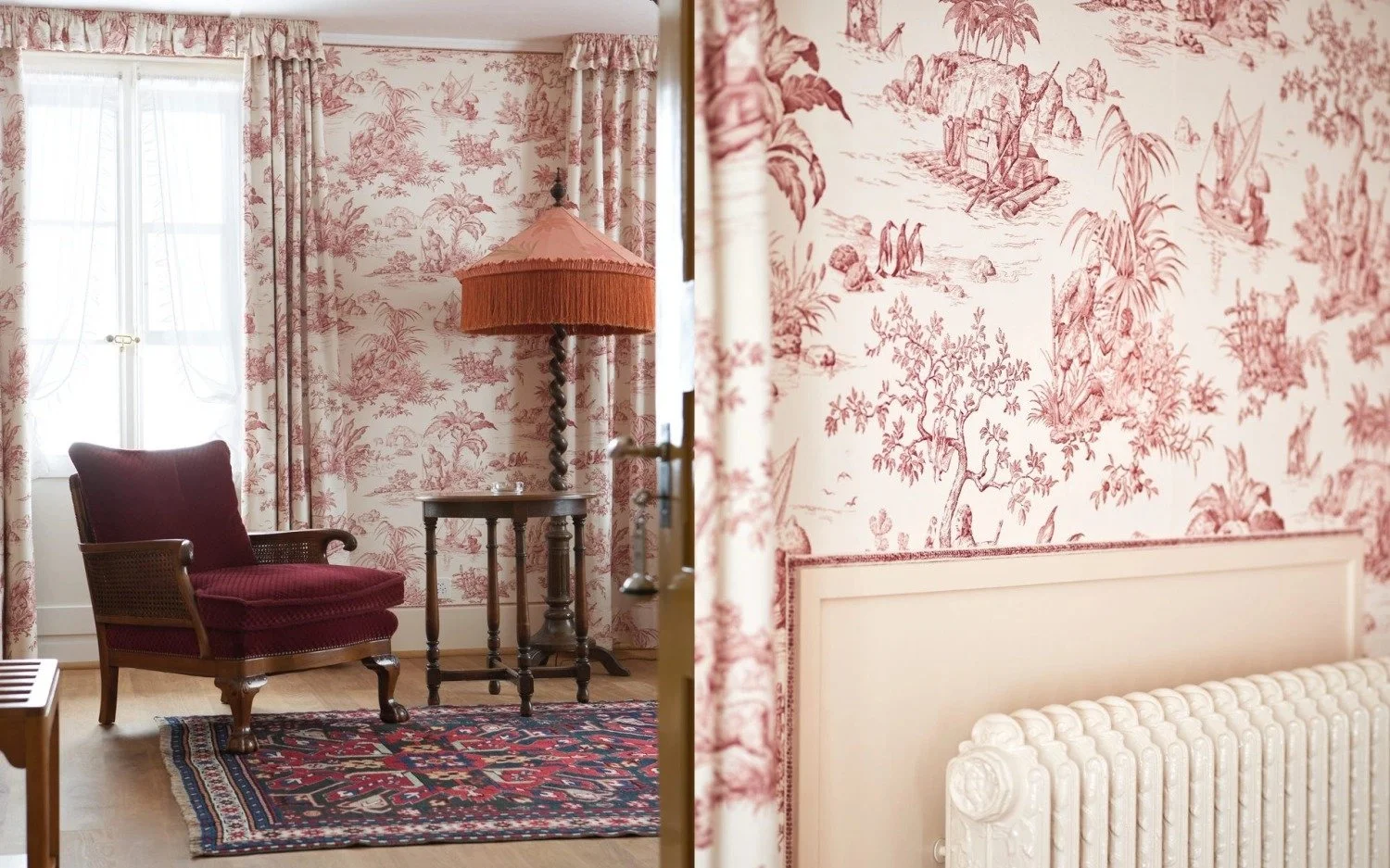
Perhaps that is why historic mountain hotels exert such power now. Contemporary travel promises frictionless access, infinite choice and instant documentation. The Bellevue offers limits. The train follows its timetable. The weather closes in. The mountain may disappear. Dinner still has an hour. These constraints return proportion to the day, and attention to the traveller.
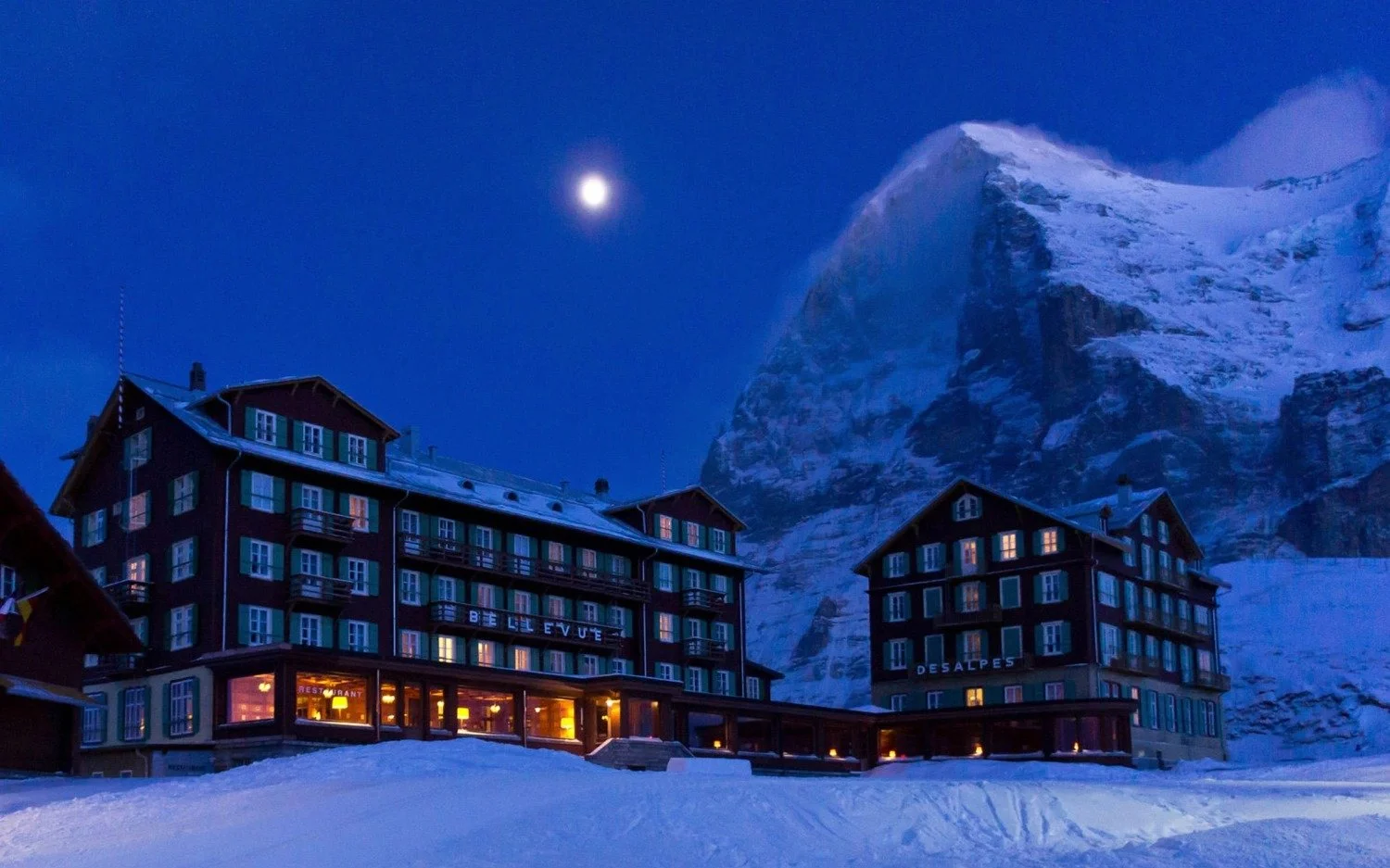
Long after dark, when the last movement on the platform has ceased, the hotel appears less like an outpost than a ship held fast above the valleys. Lamps glow against the snow. Within, the old rituals continue. Beyond the glass, the Eiger is invisible but emphatically there. The Bellevue's achievement is that it has never tried to conquer that presence. For nearly two centuries, it has simply kept the lights on beneath it.