
Autumn’s Hearth
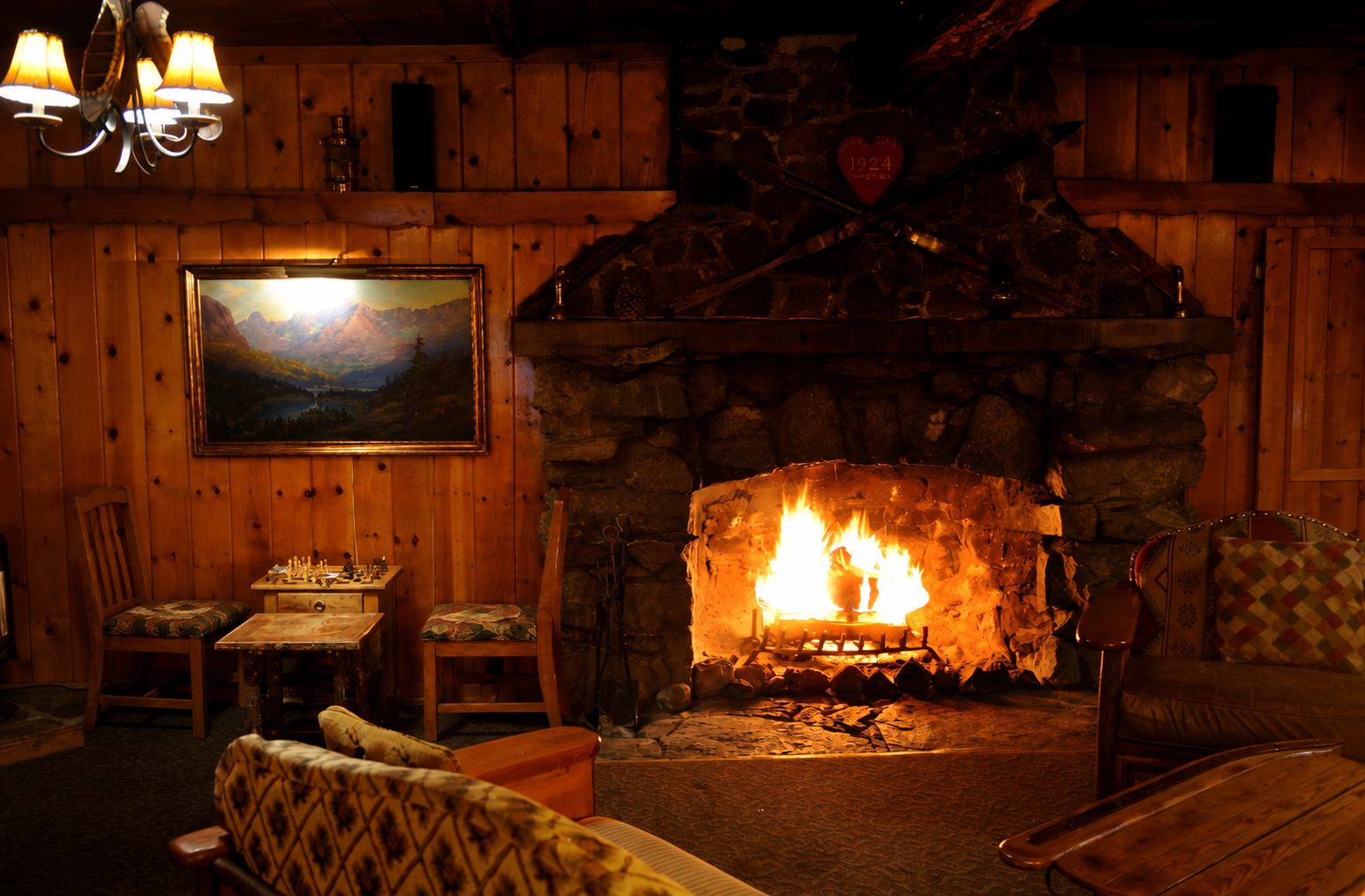
There is a moment each autumn when the mountain turns inward. The trails grow quiet. Shadows lengthen across the valley. Wood is stacked beneath the eaves, shutters are drawn earlier, and smoke begins to rise once again from the chimneys of houses that have stood quietly awaiting Autumn’s arrival and after Summer’s lengthy departure.
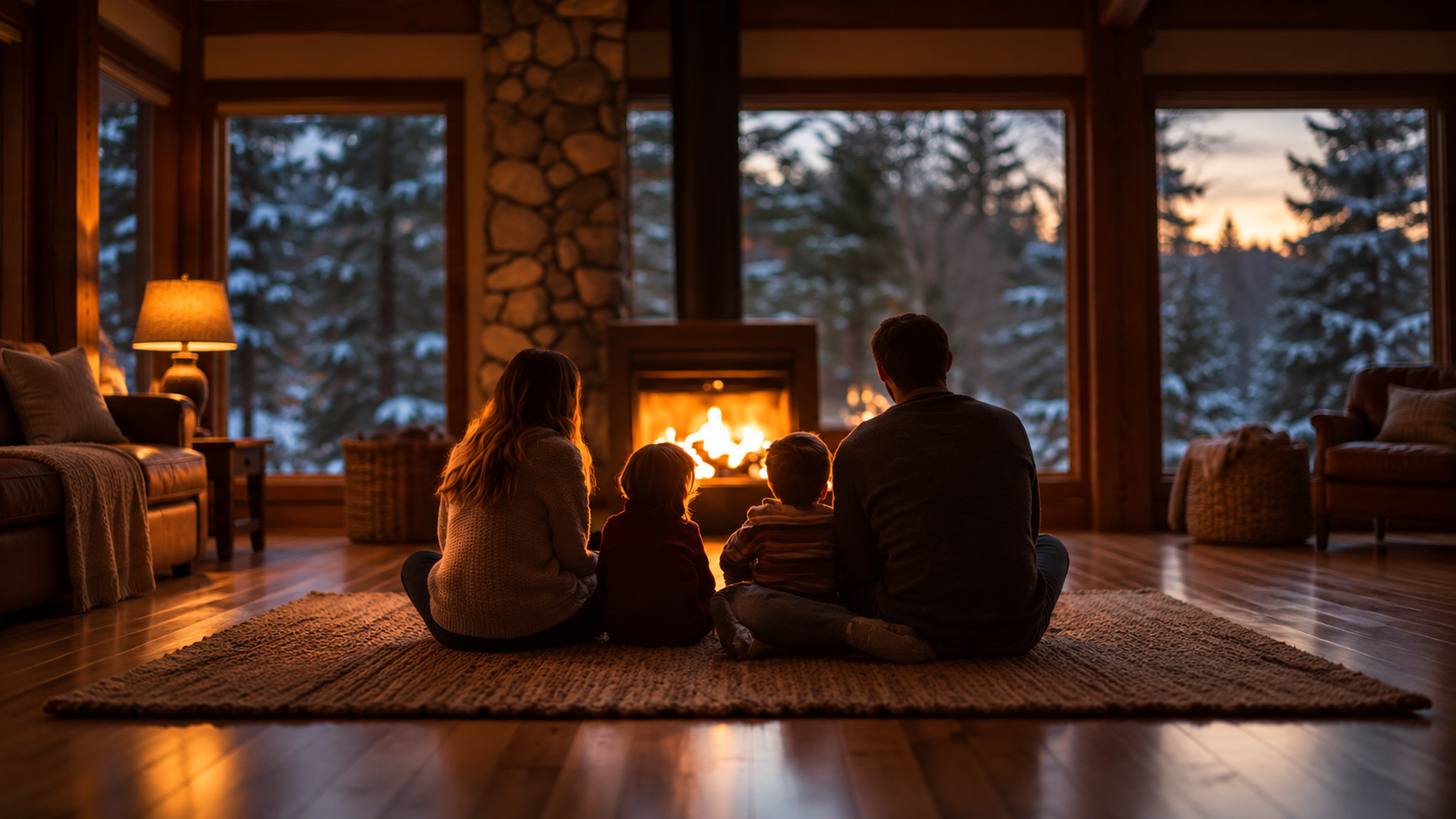
At the center of this seasonal return is the hearth.
Before it became an architectural flourish or an emblem of mountain hospitality, the hearth was essential. It gave heat, light, and sustenance. Yet its greater importance was measured not simply in degrees of warmth, but in the life that gathered around it.
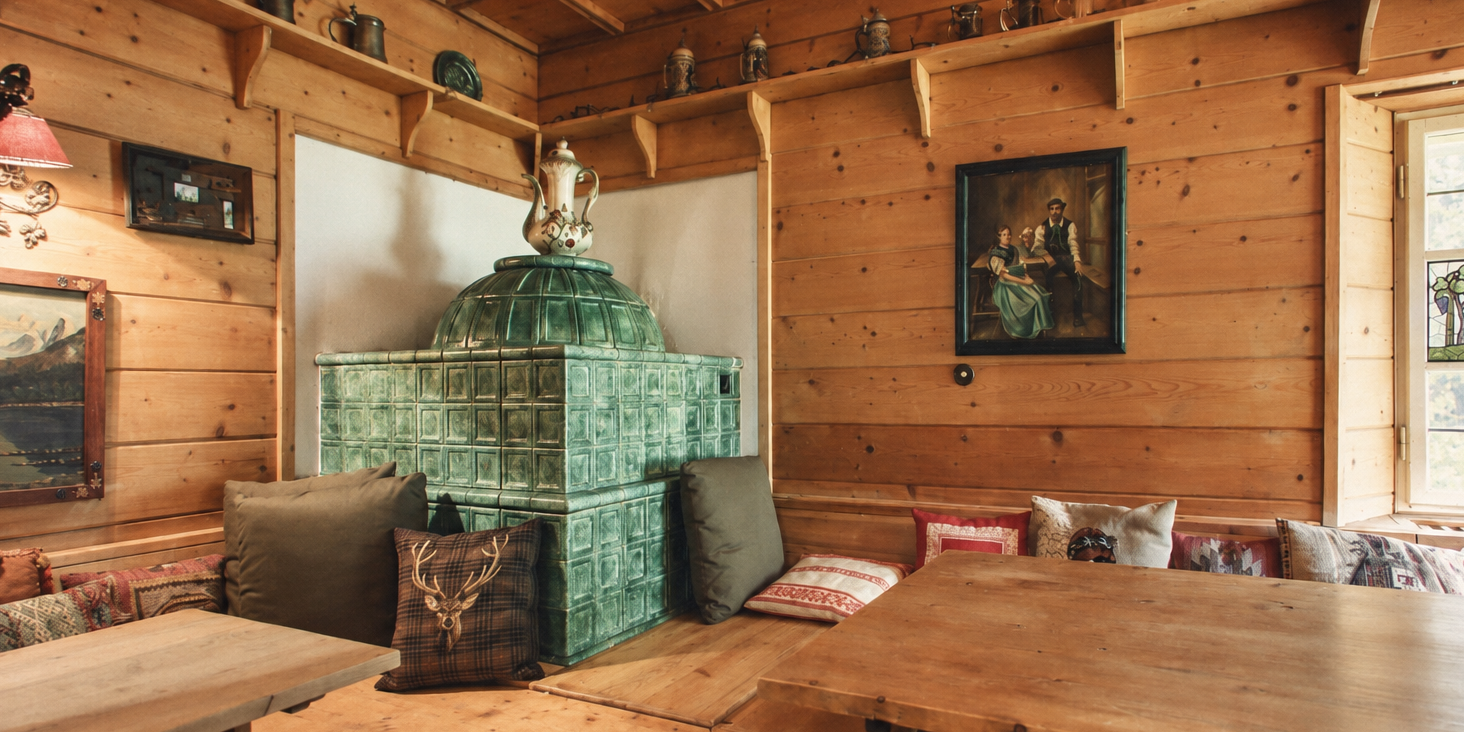
In the traditional Alpine home, warmth was concentrated. Stone walls protected against the wind. Timber retained the heat. Rooms were arranged according to their proximity to the fire. In many German-speaking Alpine communities, the principal gathering room became known as the Stube—a wood-lined chamber warmed by a masonry or ceramic-tiled stove.
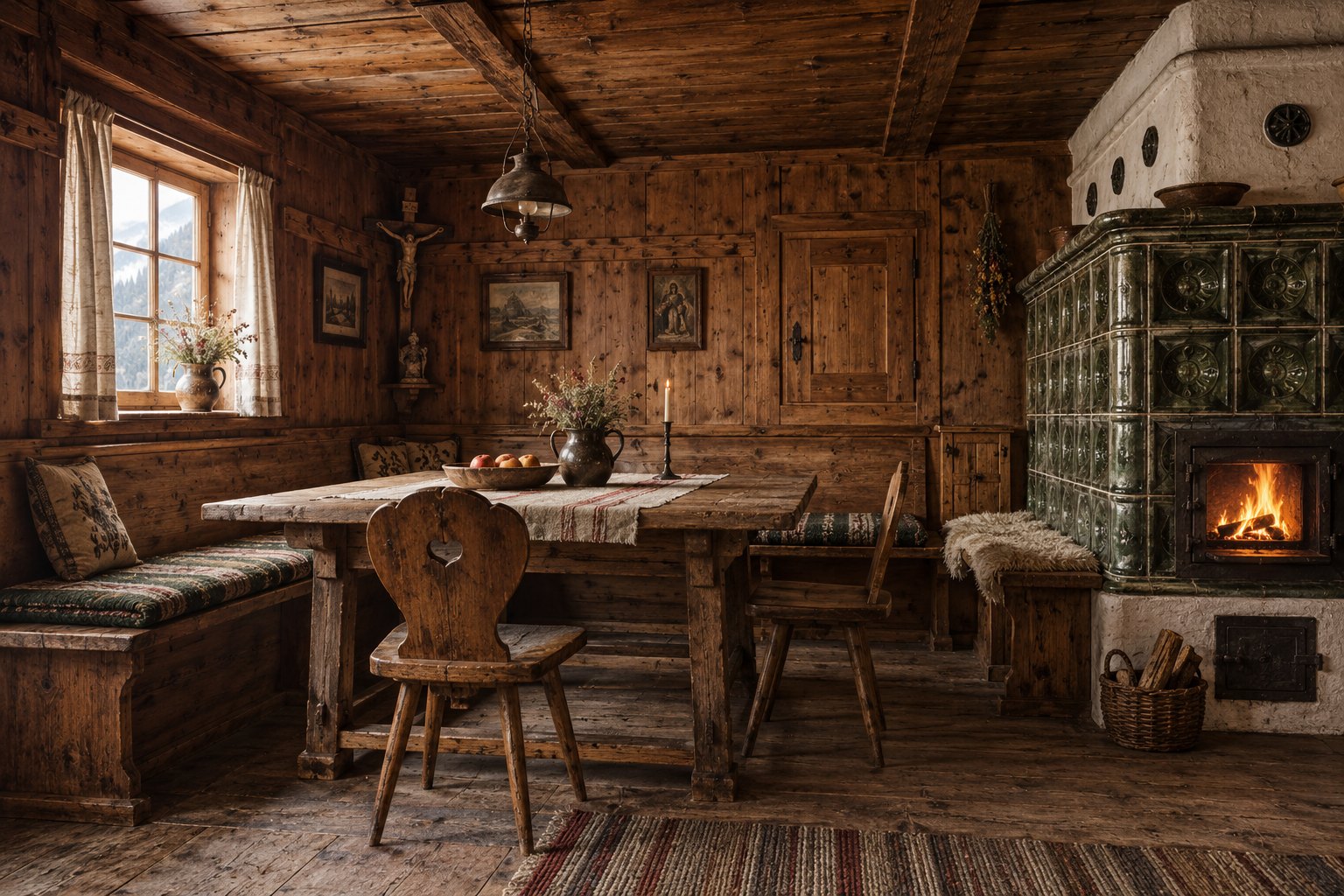
Here, the household contracted into a single shared space. Meals were taken. Clothes were mended. Tools were repaired. Stories were repeated. Children listened as older generations recalled storms, harvests, journeys, and winters whose severity grew with every telling. The hearth did not merely occupy the room. It organized it. Its physical design encouraged intimacy.
Benches followed the walls and turned toward the heat. Chairs could be drawn closer as evening cooled. The table stood nearby, carrying bread, soup, cards, maps, correspondence, and the daily evidence of lives lived together. The fire established a natural circle—one without a head or hierarchy. Those who entered it shared its warmth and, for a time, one another’s company. Perhaps this is why the hearth became so closely associated with welcome. To offer someone a place beside the fire was to bring them inside the protective boundary of the household.
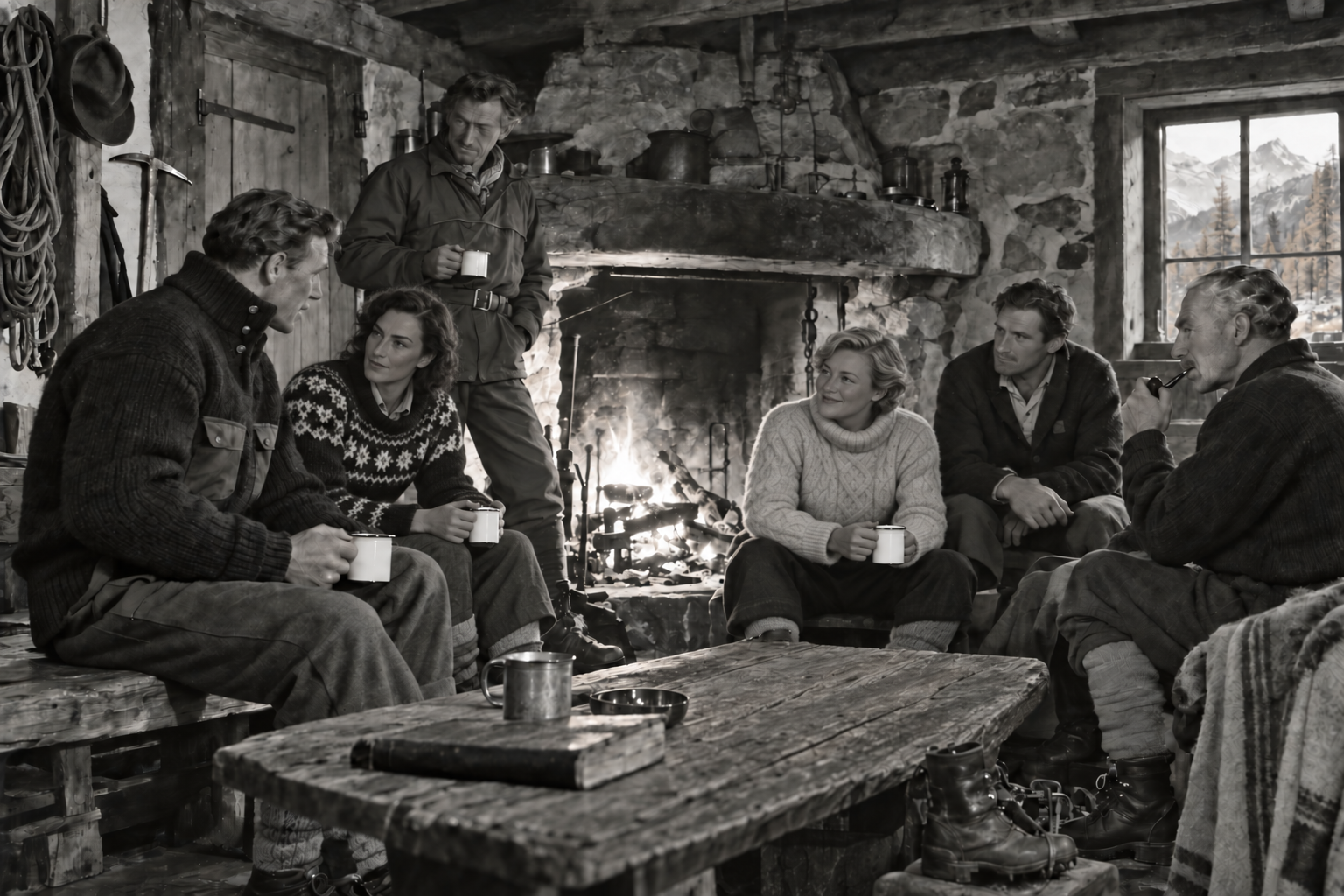
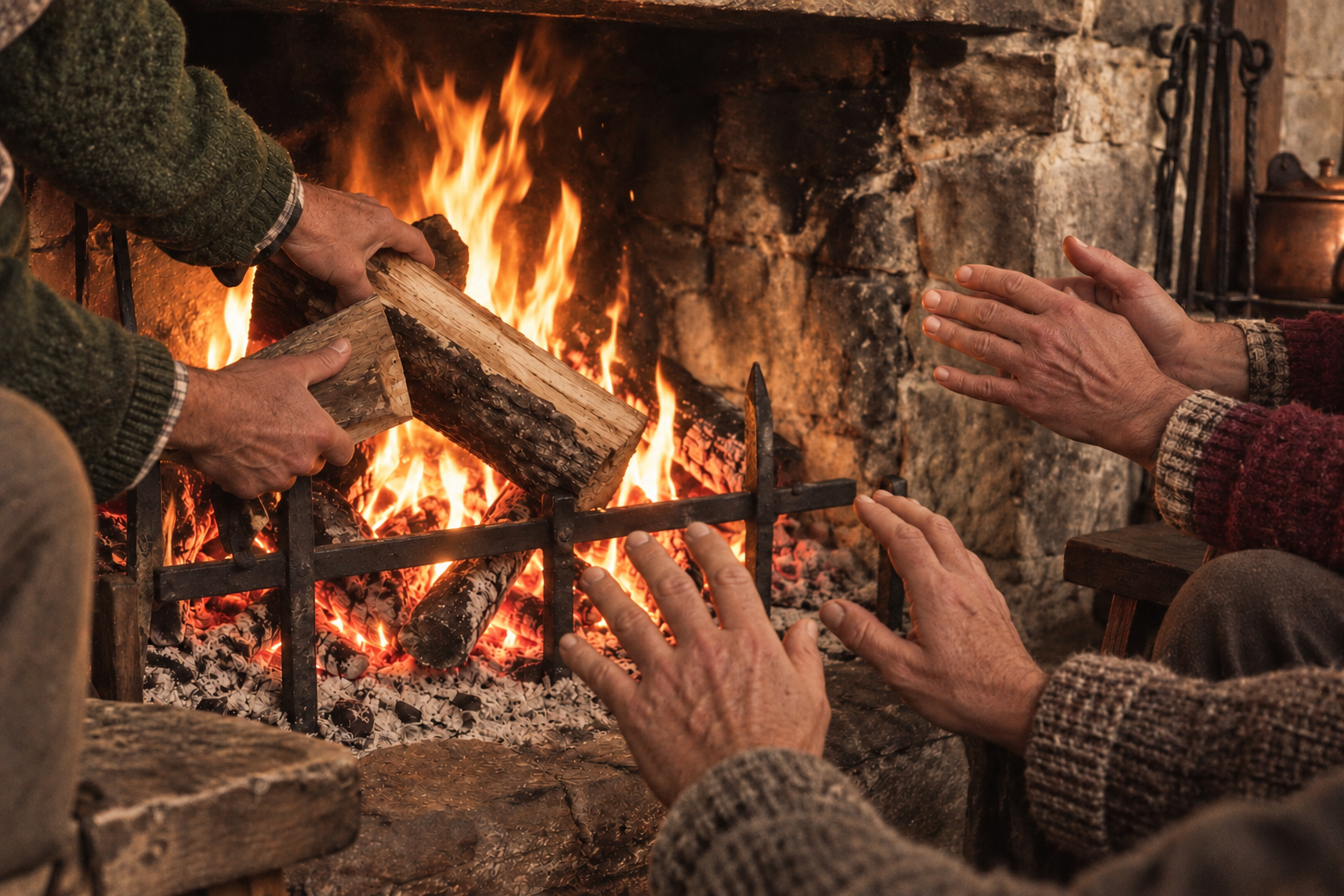
High above the villages, the mountain refuge carried the same idea into more elemental surroundings. The earliest huts offered little beyond shelter. A stove, a rough table, wooden benches and a place to sleep were sufficient. Travelers arrived carrying the conditions of the mountain with them: snow on their shoulders, damp wool, reddened hands and the fatigue of ascent. Around the fire, strangers became temporary companions. Routes were compared. Weather was interpreted. Food was divided. Silence was permitted. The common experience of exposure outside made the warmth within feel less like comfort than deliverance.
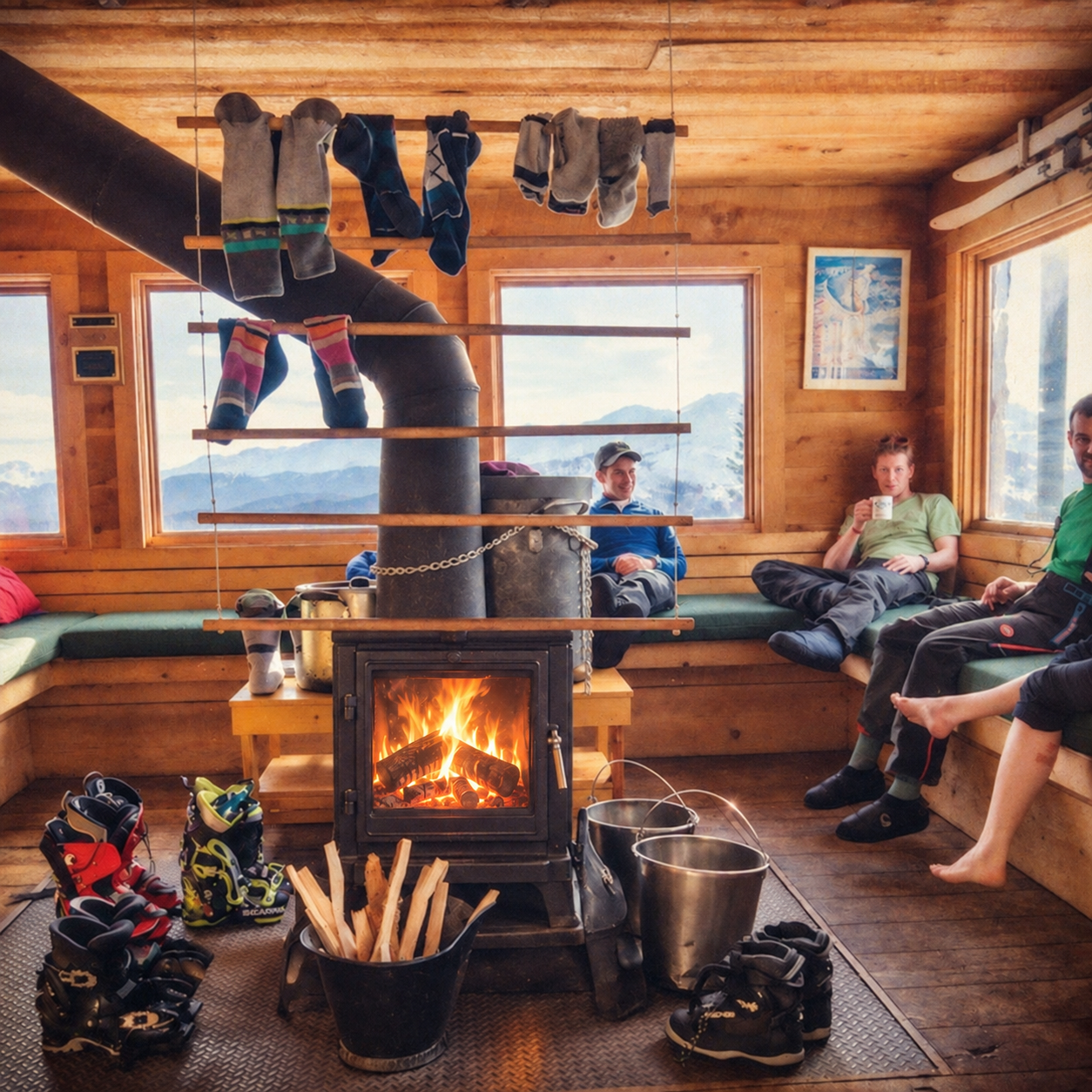
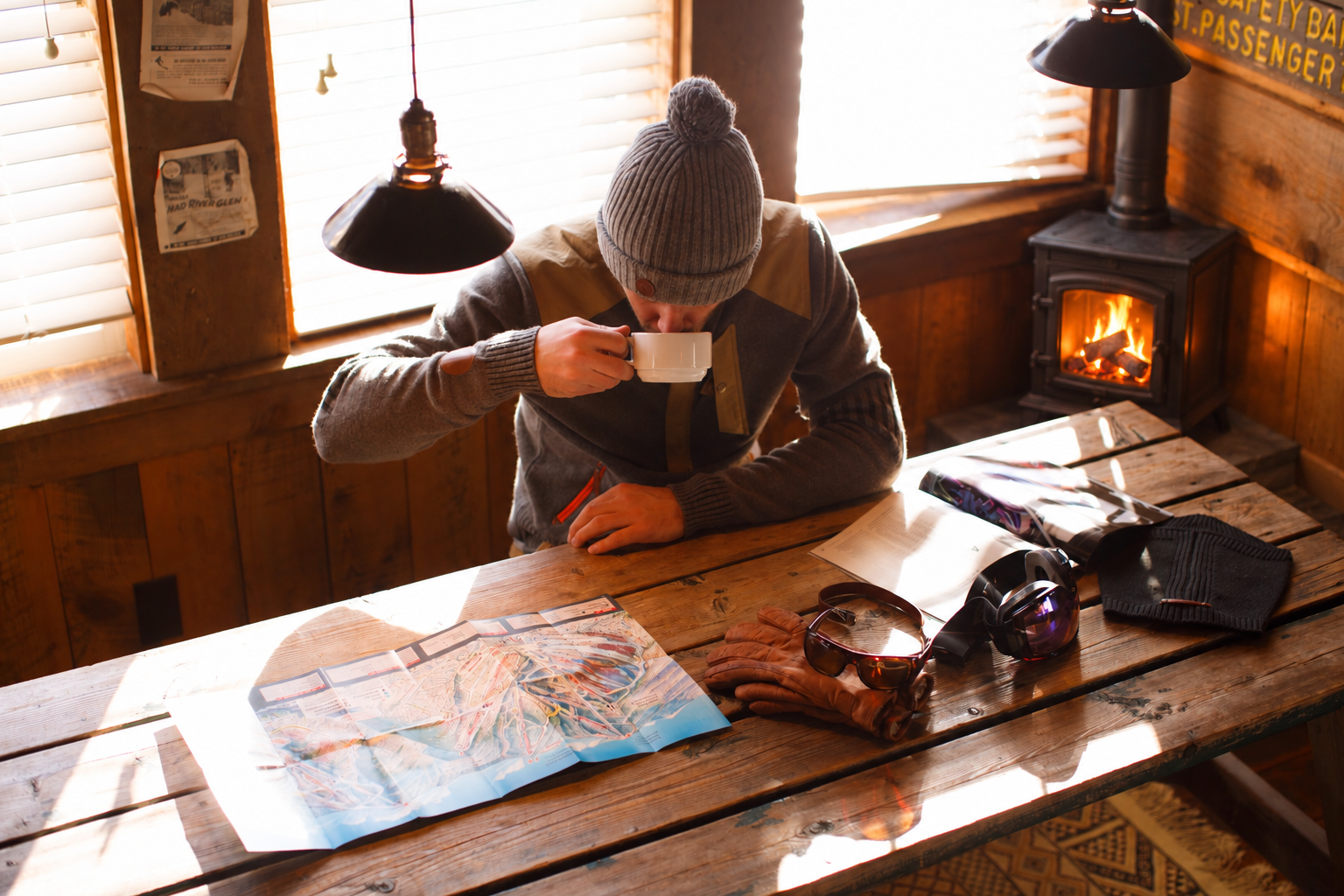
As mountaineering became recreation and skiing developed its own social culture, the hearth assumed another role. It became the point of return. The day’s ambitions—summits attempted, slopes descended, distances traveled—were recounted beside the fire. Boots dried at its edge. Gloves steamed. Drinks appeared. Failure softened into anecdote, and accomplishment was retold with increasing generosity. The hearth transformed exertion into memory.
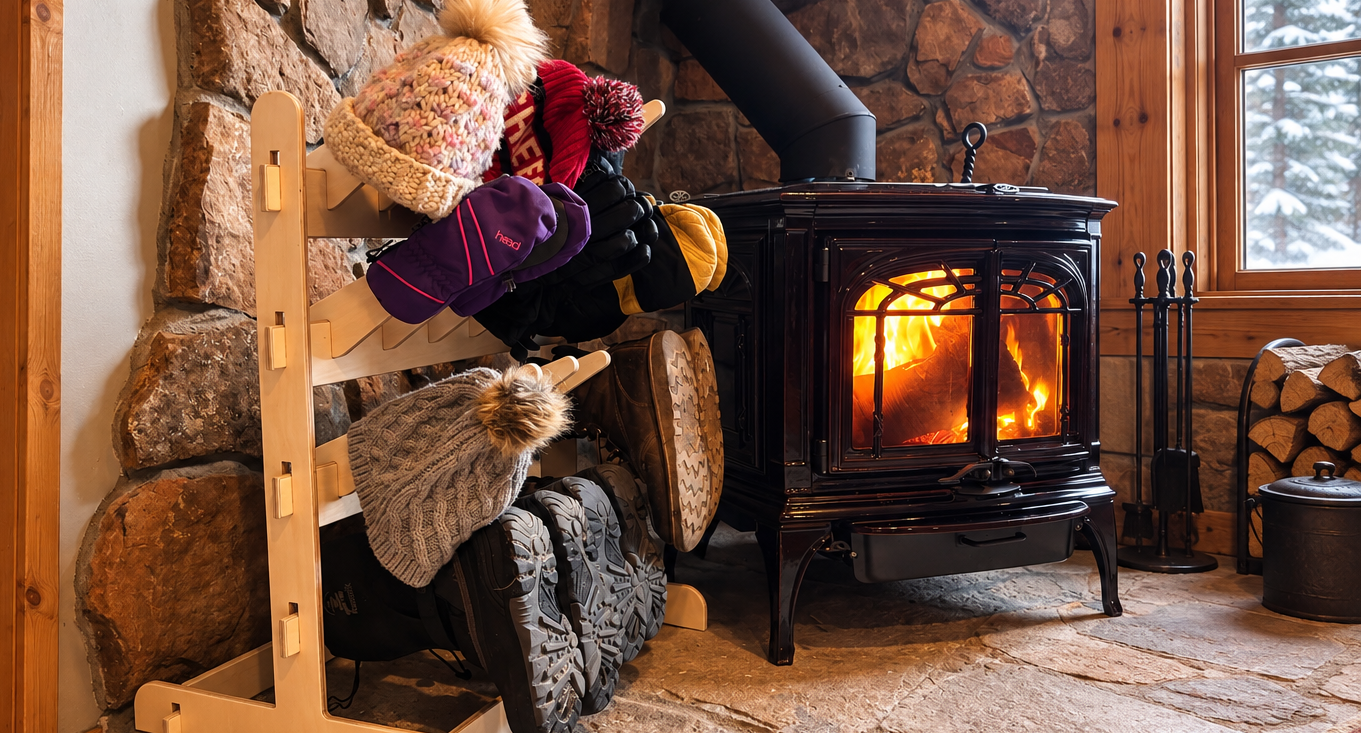
Across mountain cultures, its form changed. It might be an open stone fireplace, a cast-iron stove or an elaborately tiled Kachelofen built to absorb heat and release it slowly through the night.
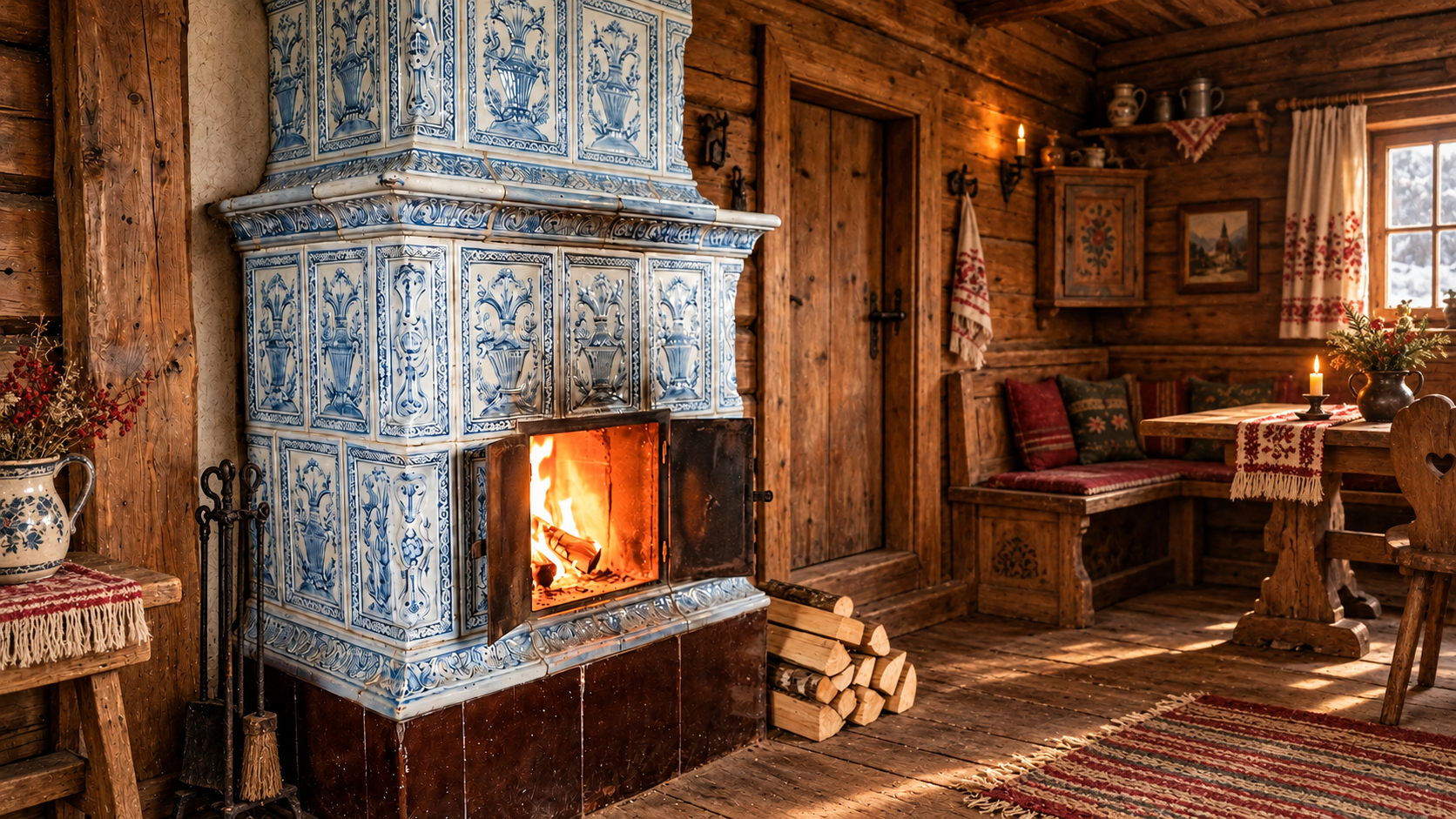
Its purpose, however, remained remarkably constant. It gathered people when climate might otherwise separate them. It created abundance from limited resources. It turned a remote building into a refuge and a room into a place of belonging.
Today, the hearth is no longer the sole source of survival it once was. Mountain houses are insulated. Lodges are centrally heated. Light arrives instantly, and weather can be read from a screen rather than the movement of smoke or the behavior of the wind. Still, when a fire is lit, people move toward it. Conversation slows. Chairs are repositioned. The room finds its center.
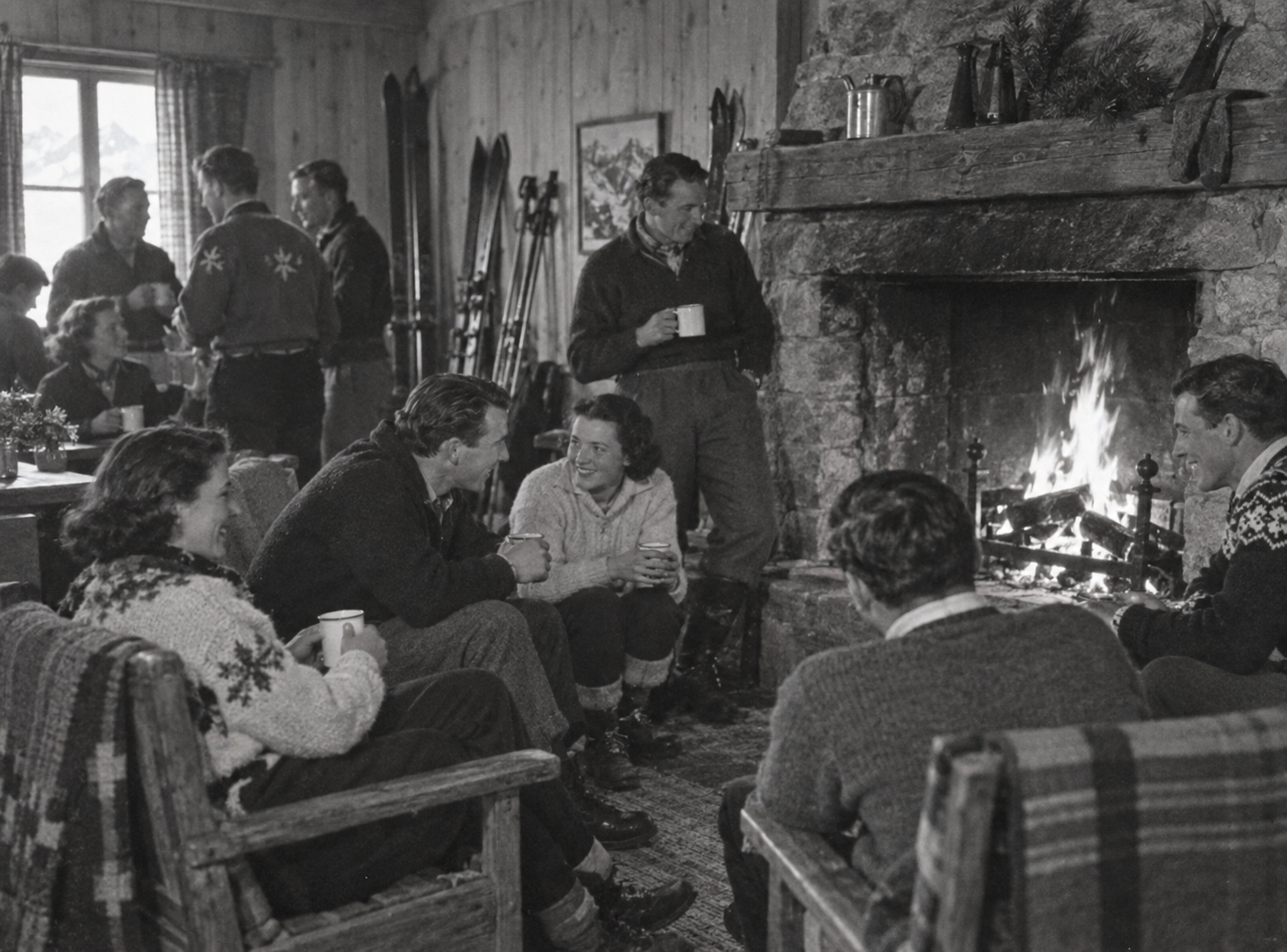
Perhaps what draws us is not nostalgia for a harsher life, but recognition of an older rhythm—one in which warmth was made deliberately, tended patiently, and shared without calculation. September is the beginning of that return. The first fire of autumn rarely answers an urgent need. The evening may be cool rather than cold; winter remains somewhere beyond the ridge. Yet lighting it marks an understanding between the household and the season.
The mountain is turning inward again.
And around the hearth, so are we.