
Of Almanacs, Signs, and Snowfall
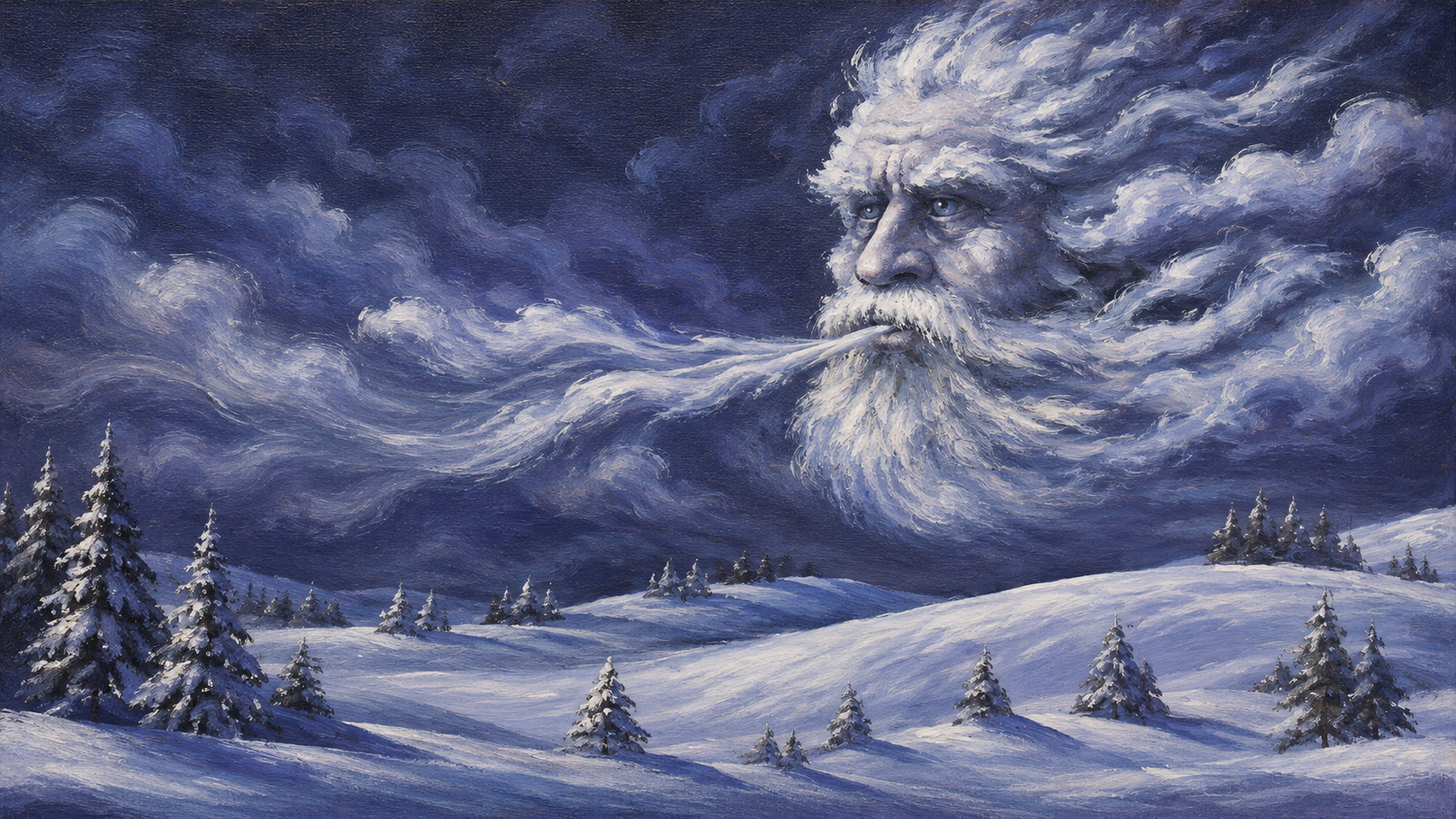
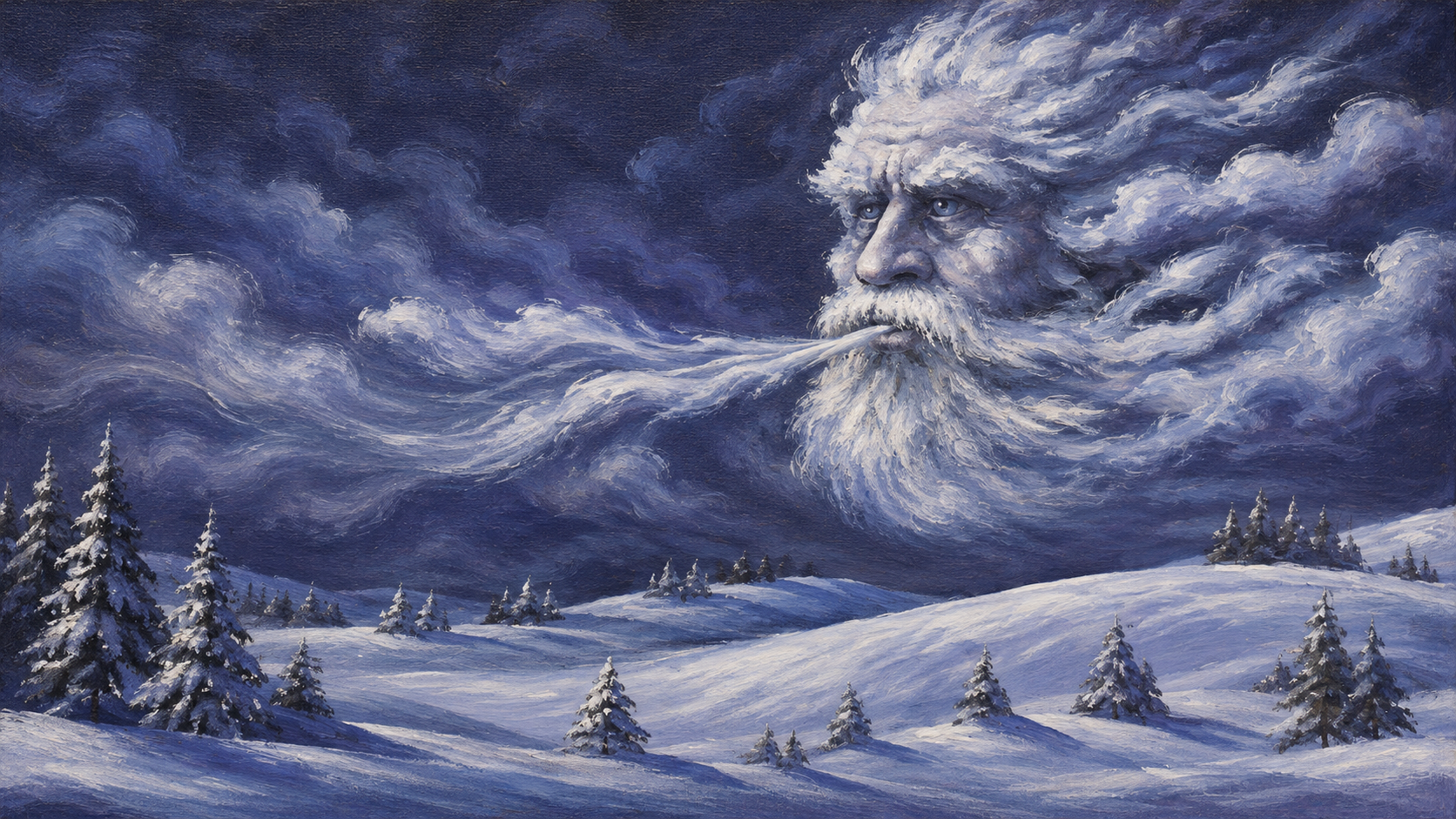
From the farmhouse tables of New England to the mountain villages of Europe, the anticipation of snowfall has long inspired its own literature, rituals, and traditions. For the men & women of alpine sport, the search for signs remains part of winter’s enduring appeal.
There is a particular interval in the mountain year when autumn has relinquished its color, yet winter has offered little more than a suggestion. The hardwoods stand bare. Frost gathers along the edges of the window. Above the village, a pale dusting briefly reveals the higher ground before disappearing into afternoon cloud.
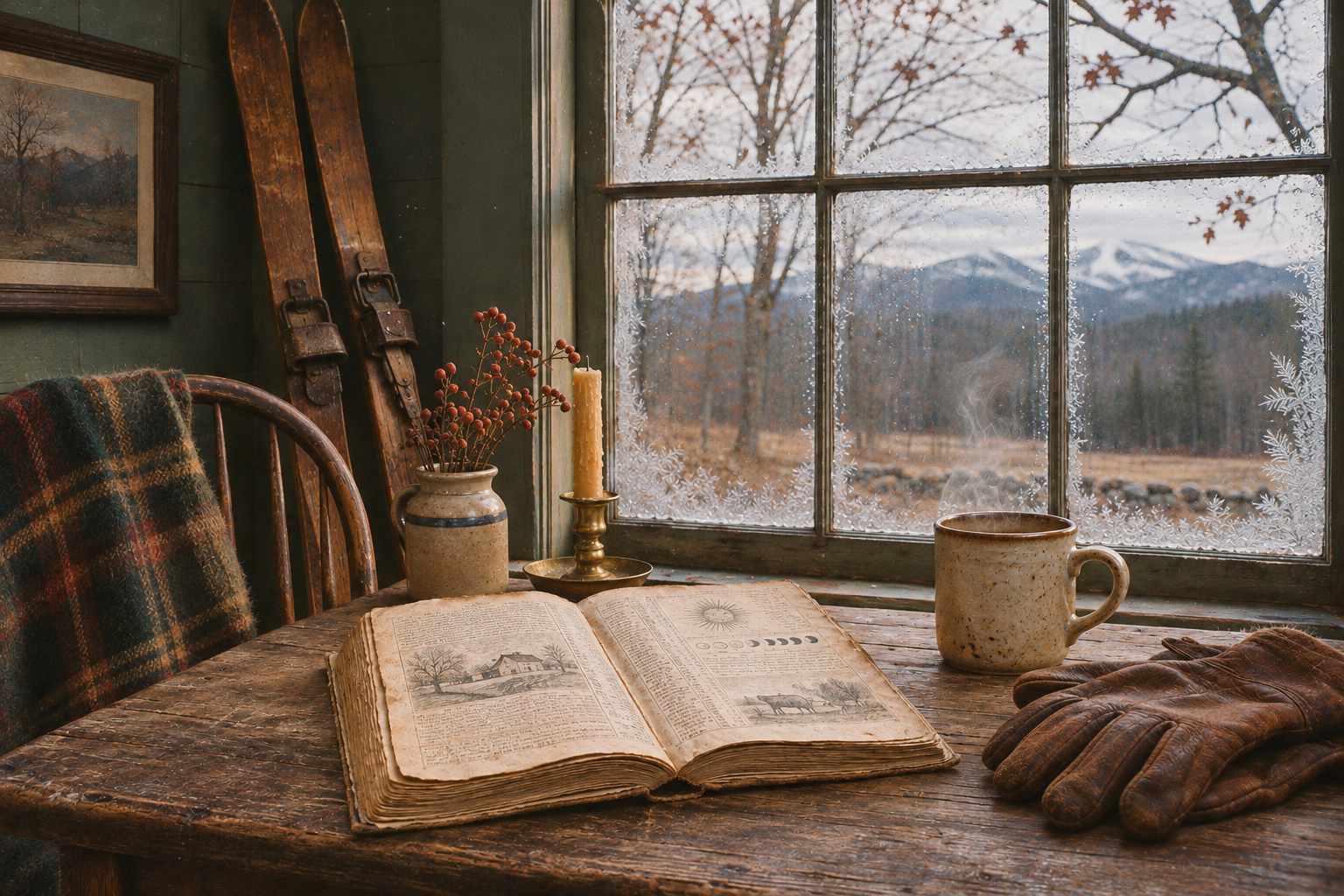
For the skier, these are days of close attention.
A morning feels colder than the thermometer suggests. A familiar summit vanishes behind a gathering front. Someone recalls a winter that began just this way, followed by a snowfall so considerable that its depth is still measured against a fence, a doorway, or the shoulders of a much younger self.
In such moments, almost anything can become a forecast.
Long before snowfall totals arrived on illuminated screens, winter announced itself through a more intimate collection of signs. There were observations made at the woodpile, sayings repeated at the kitchen table, and little books whose pages offered the comforting possibility that the coming season could already be understood. The farmer’s almanac belonged to this world.

For those whose lives followed the land, knowing something of the weather meant knowing when to prepare, when to work, and when to wait. The skier inherited a different relationship with the same uncertainty. Snow could interrupt one person’s livelihood while opening another person’s favorite path through the woods. Across the mountains of North America and Europe, these interests meet in a familiar autumn question. What kind of winter will it be?
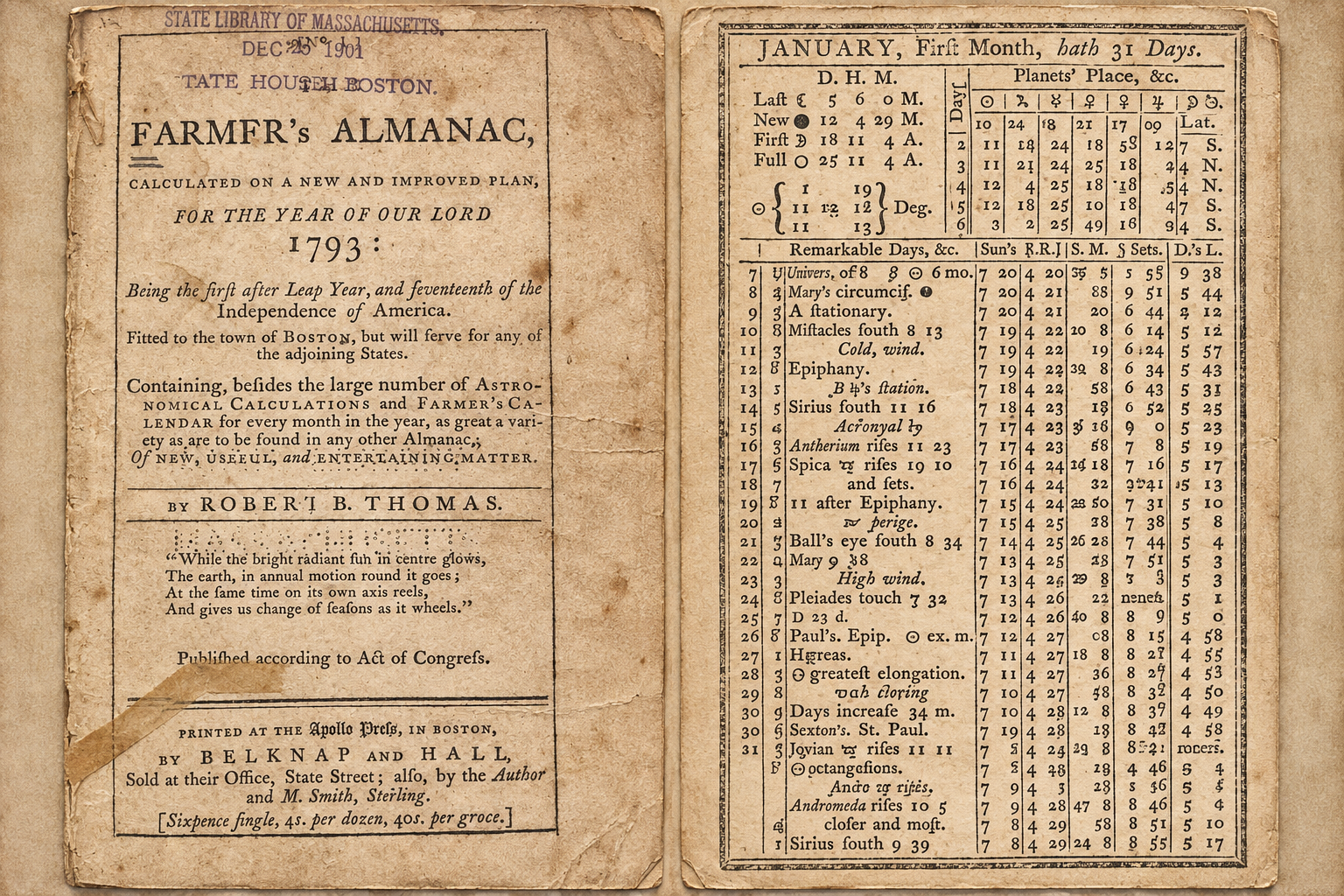
In 1792, Robert B. Thomas published the first edition of the book that would become The Old Farmer’s Almanac, dated for the year 1793. Its combination of astronomical information, weather predictions, practical advice, and entertainment established an enduring place in American life. Its origins precede the chairlift and the modern ski resort by generations. An almanac offered a way to arrange the approaching year. Between its covers, the movements of the heavens sat alongside the concerns of the household. The predictable return of sunrise, moonrise, and the seasons lent a reassuring rhythm to a world whose daily weather remained uncertain.
One can understand the appeal without believing that every storm could be anticipated. Imagine a book opened on a November evening, the light already gone from the fields. A finger moves forward through the calendar toward the deepest part of winter. Cold is expected. Snow is promised. Beyond the dark glass, there is nothing yet to confirm either prediction, but the season has acquired a shape. For the alpine sportsman, that is powerful reading.
It is also useful to distinguish two publications often gathered under the same familiar name. The Old Farmer’s Almanac traces its beginnings to Thomas in 1792. The separate Farmers’ Almanac began in 1818; its publishers announced that the 2026 edition would be its last. Their similar titles conceal distinct publishing histories. The affection surrounding these books extends beyond their forecasts. An almanac can become part of a household’s seasonal furniture, as familiar as the coat brought out for the first cold morning. Its return invites conversation. Its predictions provide something to debate. For the mountain enthusiast, the pleasure begins well before the prediction can be tested. A snowy passage in a small annual volume is enough to bring back the sound of skis on a wooden porch, the weight of a wool sweater, and the pale light of an early departure. Winter becomes imaginable again.
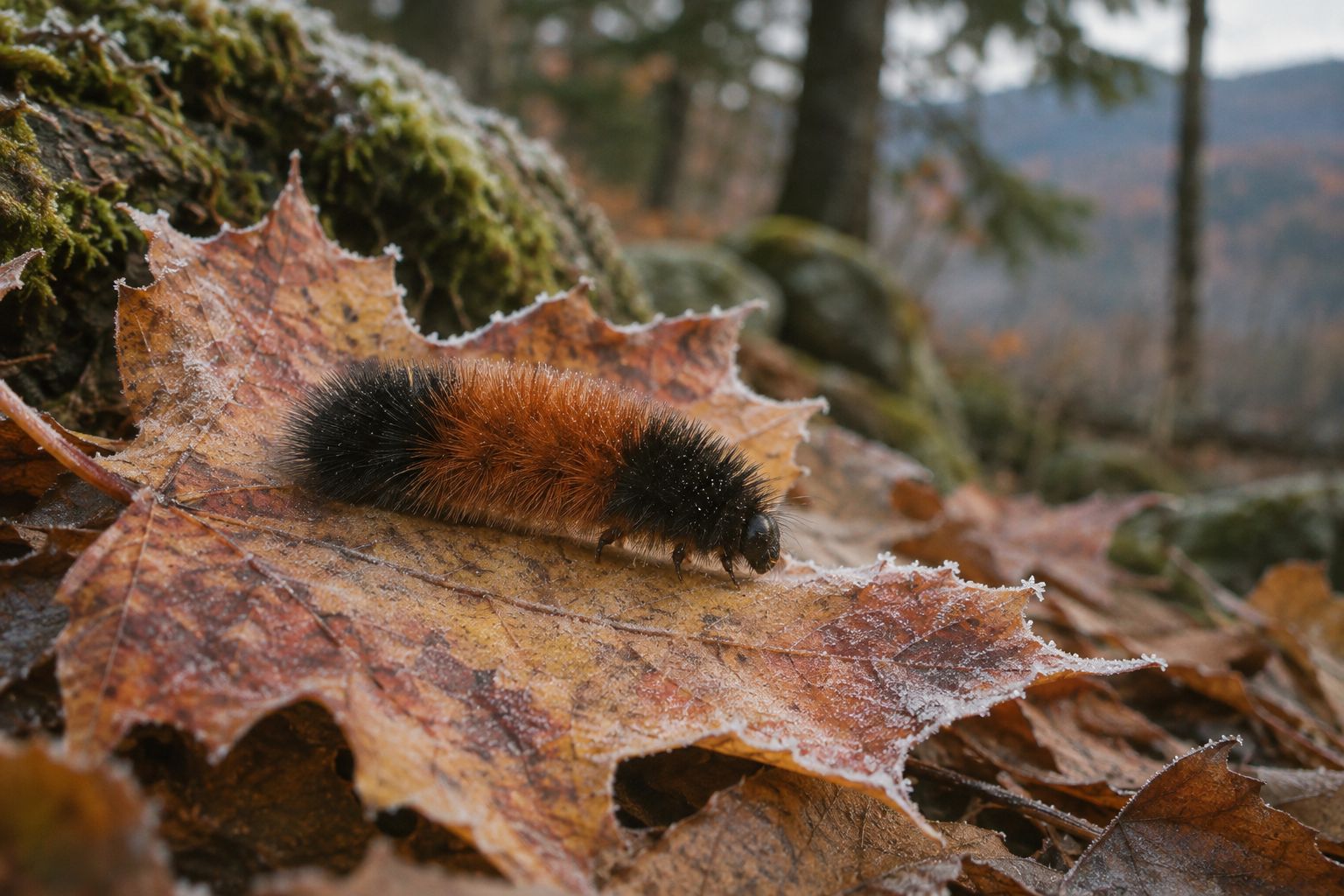
Outside the printed page, the landscape has its own supposed interpreters. Among the best known in North America is the woolly bear caterpillar, whose black and rusty-brown bands have been recruited into generations of winter speculation. According to the familiar belief, broader dark bands suggest a harsher season, while a wider brown middle promises a milder one. Other versions read the thickness of its coat or even its direction of travel. There is something irresistible about the scale of this arrangement: an entire winter entrusted to a creature small enough to cross a fallen leaf.
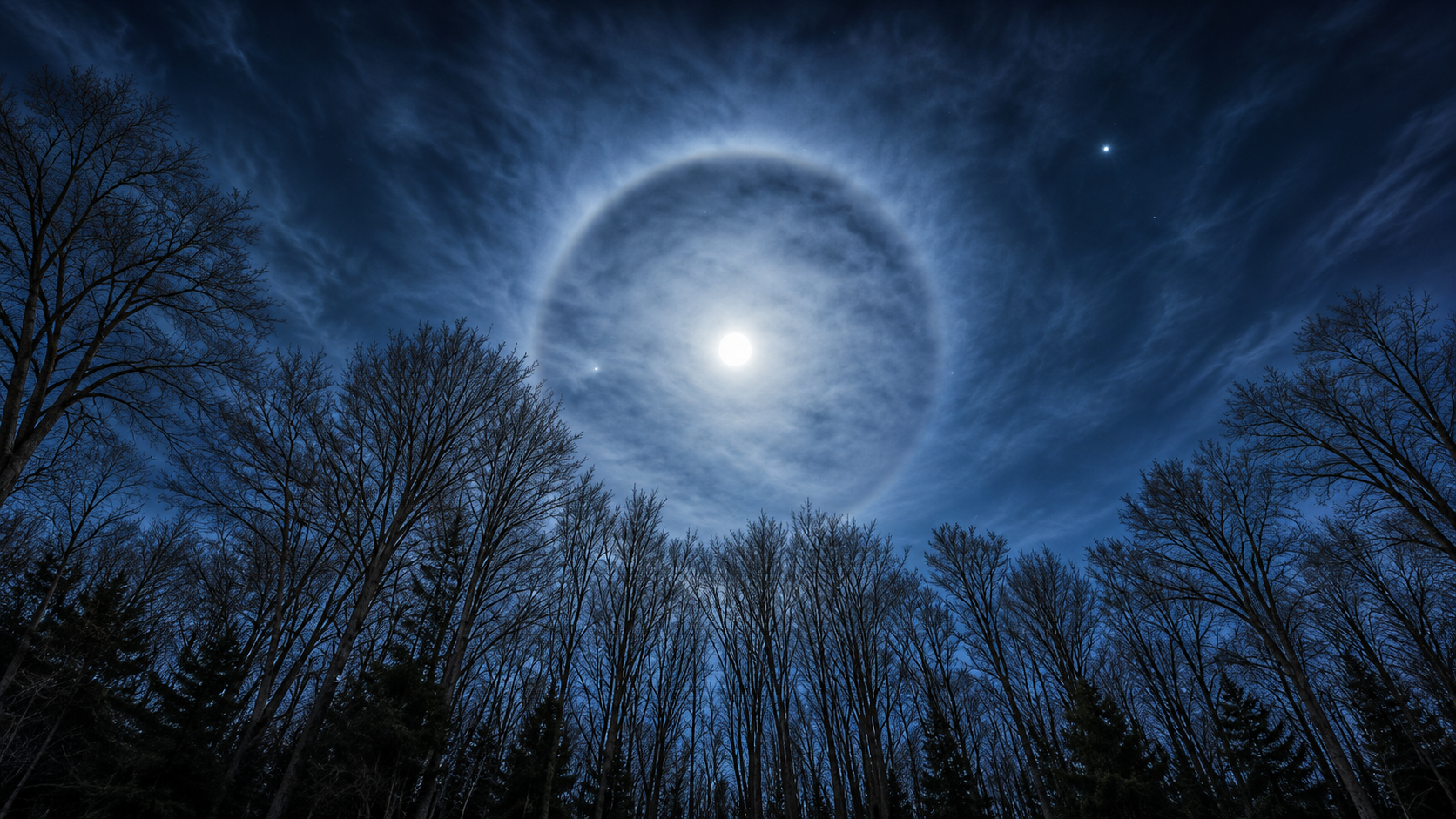
Other traditions look upward. A ring around the moon has long been associated with approaching unsettled weather. Here, the old saying has a physical phenomenon behind it. Lunar halos form as moonlight passes through ice crystals in high cloud; such cloud can accompany the approach of a weather front. The ring is a reason to observe the sky more closely, though it cannot promise snow at a particular mountain or depth. That distinction gives weather folklore much of its interest. Some sayings preserve recognizable observations. Others depend on coincidence, memorable winters, and the human preference for a story that comes true. The skier knows this preference well. We remember the person who predicted the great storm. We are less inclined to preserve every confident forecast followed by rain. Over time, the successful prediction acquires detail. The unsuccessful ones quietly leave the conversation. Still, there is value in the attention itself: noticing the insects beneath our feet, the changing cloud above the ridge, and the character of an evening sky. The habit can survive even when the prediction does not.
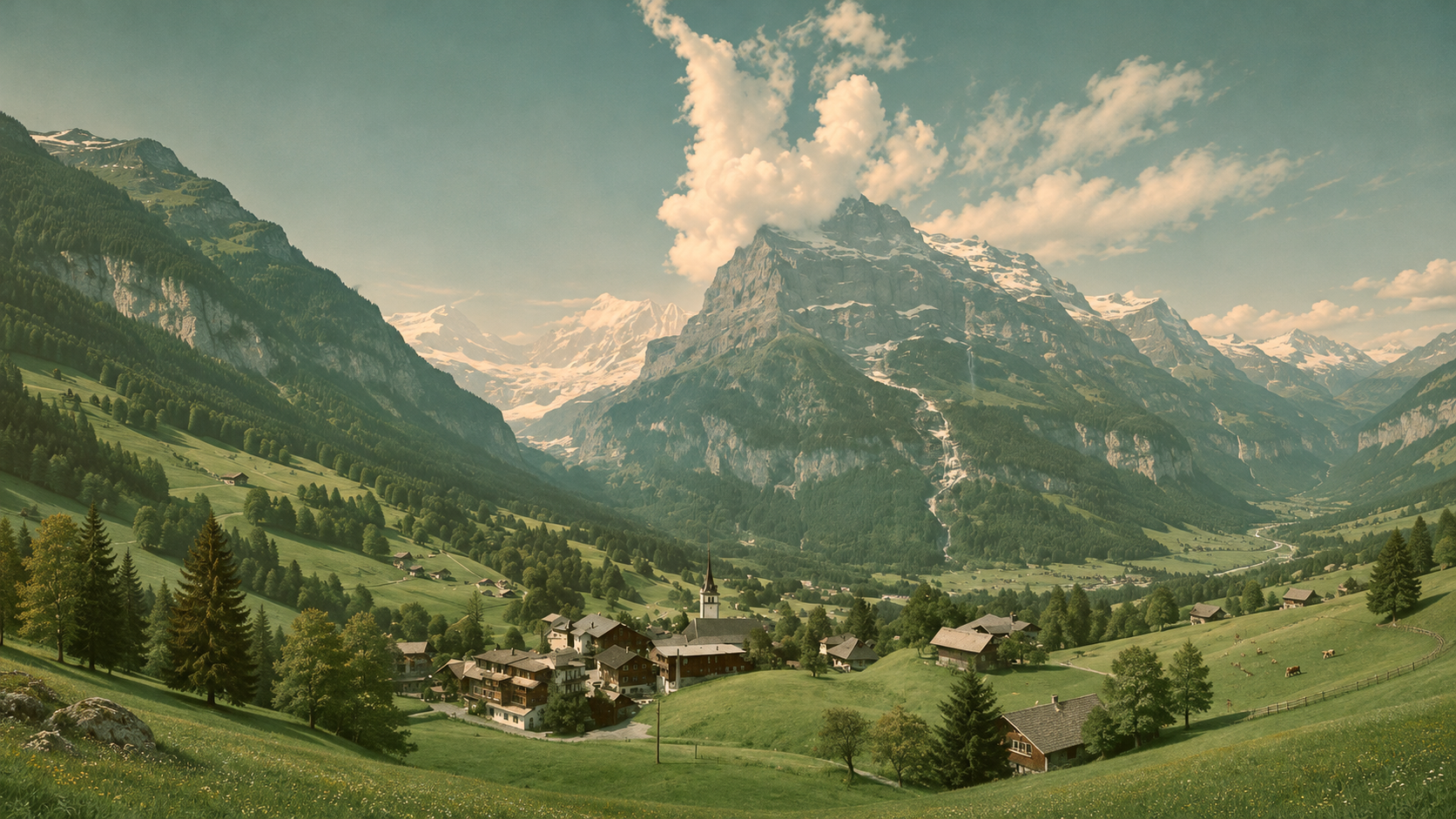
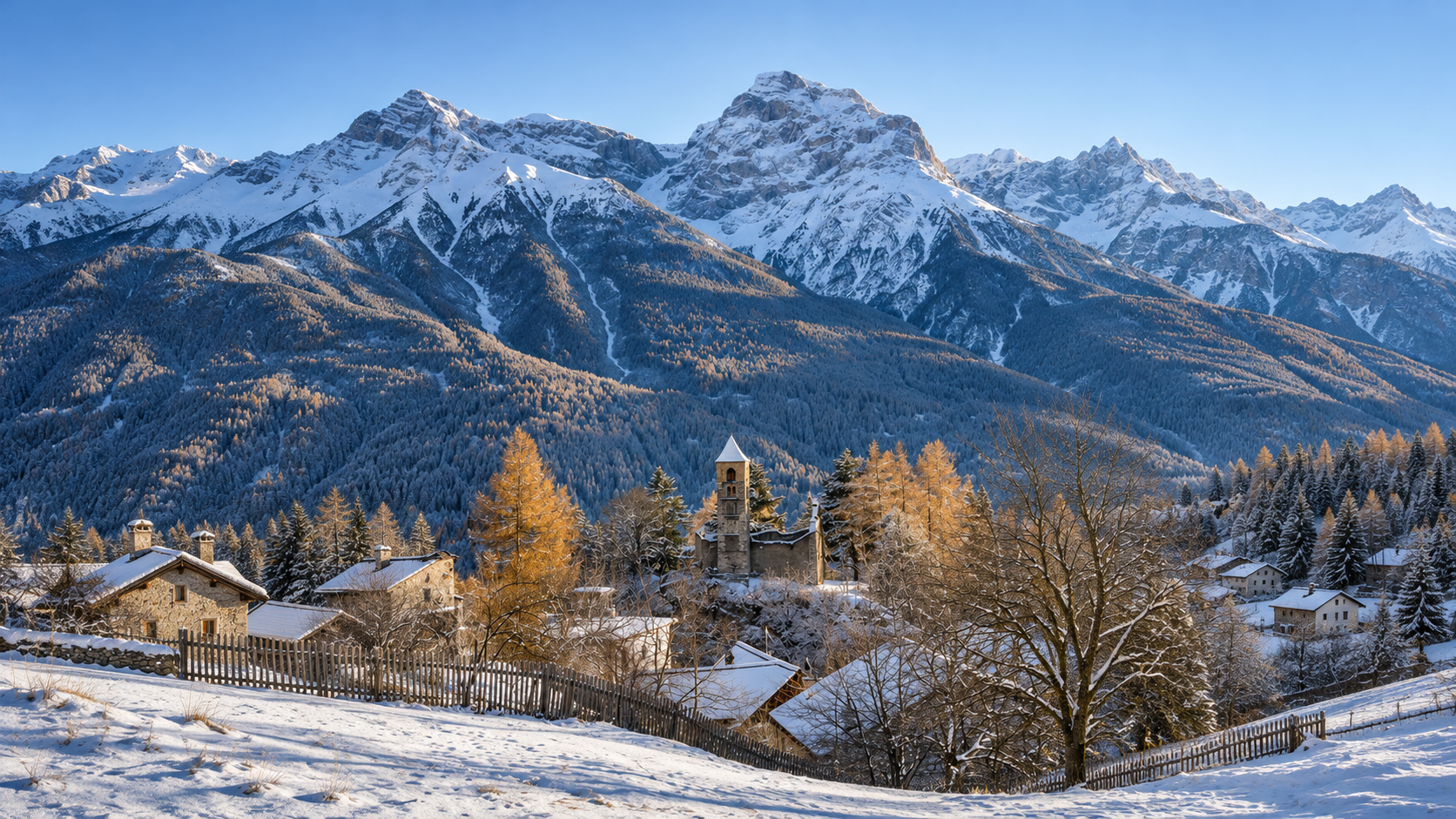
Across the Atlantic Ocean, the desire to read the coming season found expression in farmers’ calendars, local sayings, religious feast days, and knowledge gathered within the boundaries of a familiar valley. In Central Switzerland, the Federal Office of Culture records traditions of weather interpretation rooted in agricultural necessity. Observers watched clouds, animals, and other natural phenomena; some maintained handwritten weather books. These practices belonged to particular places, shaped by repeated encounters with the same landscape. A date. A temperature. Snow on the upper pasture. Wind through the village overnight. Repeated across years, the entries become a portrait of a place. They preserve both exceptional events and the ordinary conditions against which an exceptional winter is recognized. For a visiting skier, the mountain may first appear as a destination. For the people who live beneath it, its weather is woven into a much longer record.
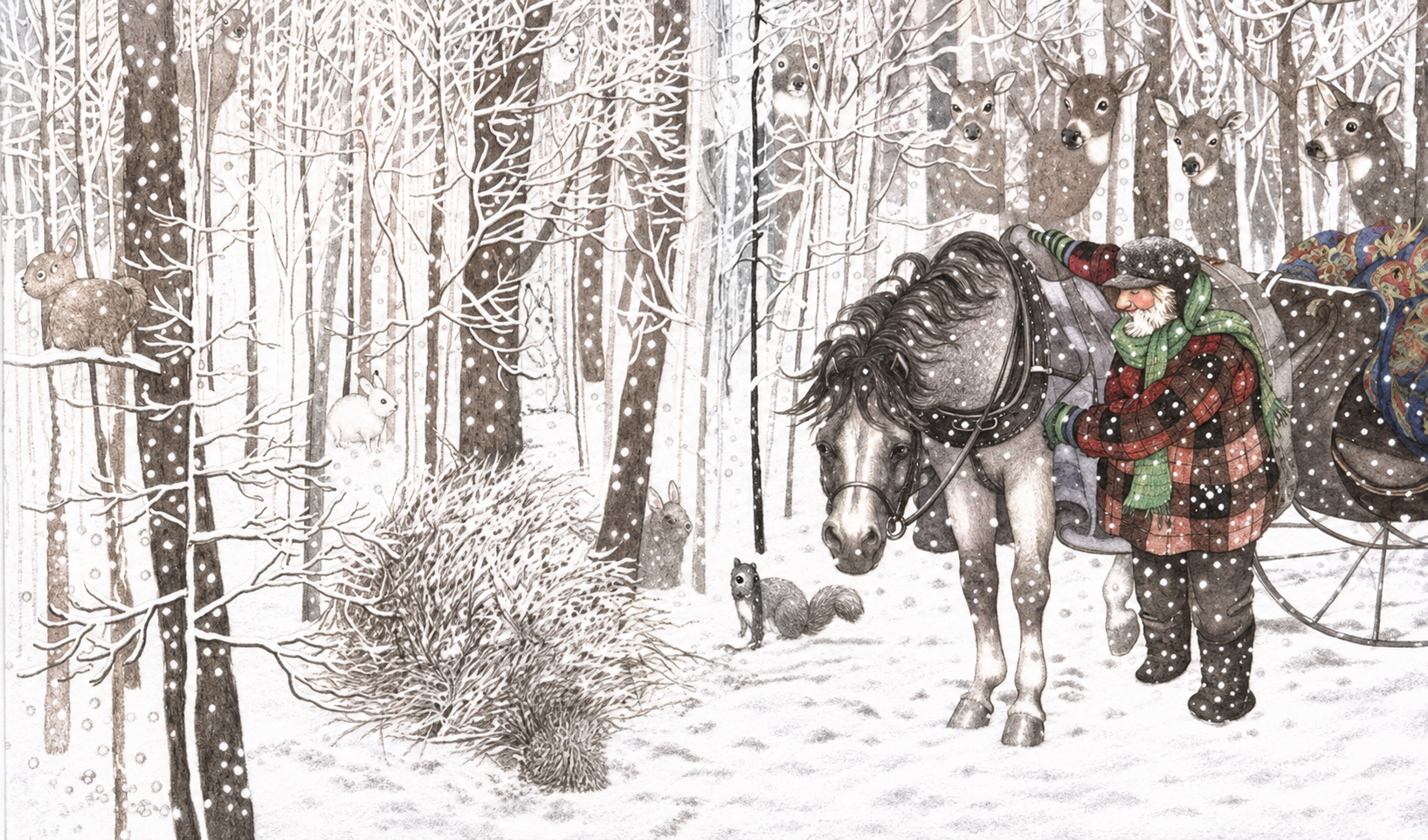
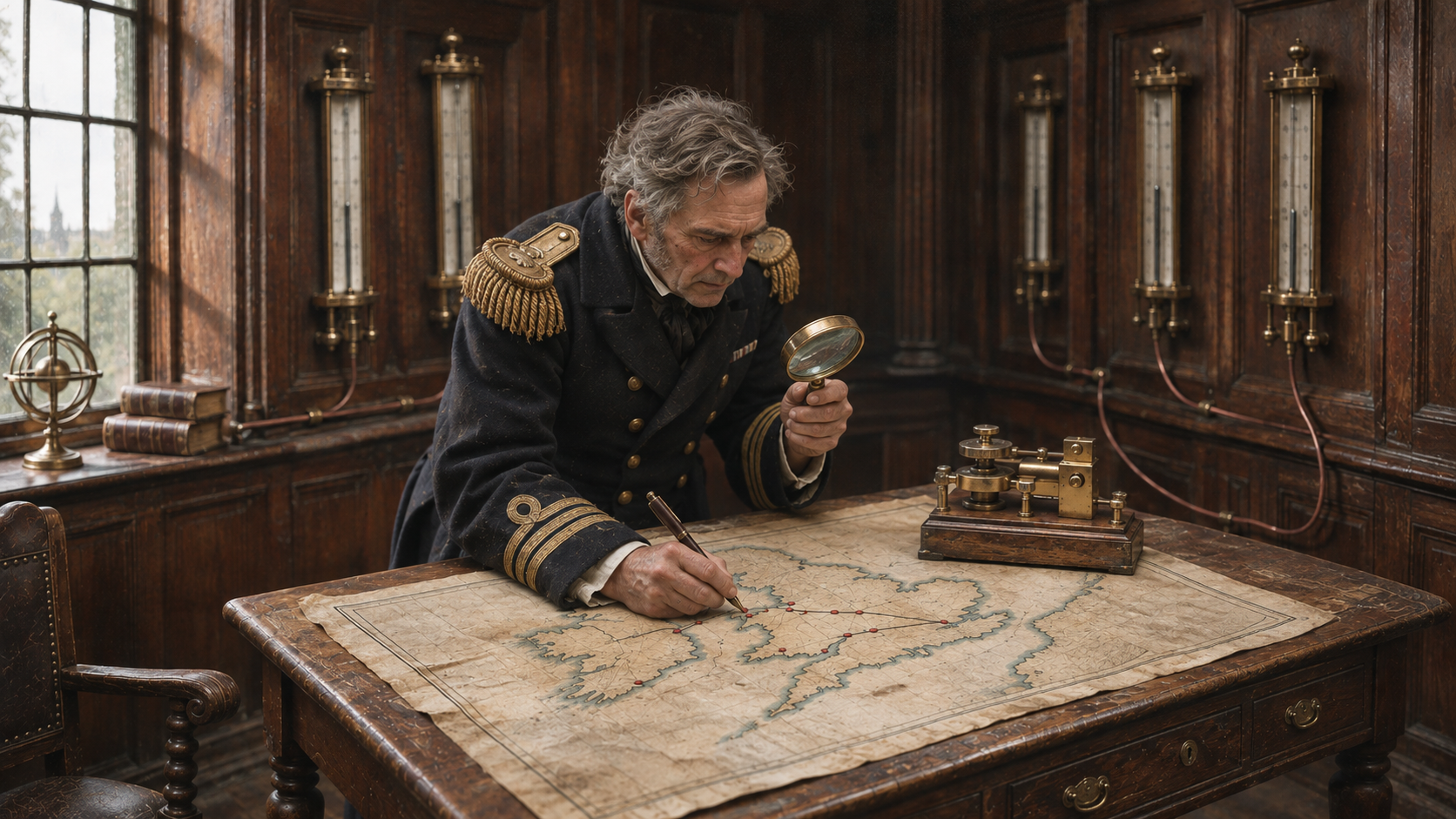
The calendar supplied another means of interpretation. Candlemas, observed on February 2, became associated with weather sayings in Europe. In the tradition described by the National Weather Service, bright weather suggested that winter would continue, while cloudier conditions offered hope of its retreat. German-speaking settlers carried related customs to Pennsylvania, where the groundhog became the best-known animal participant in an American version of the ritual. Groundhog Day therefore belongs to a larger transatlantic story: a seasonal question carried between places, adapted to a different landscape, and eventually transformed into a public celebration. These European and North American traditions share a desire to make the turning year legible. Their details differ, but each gives uncertainty a recognizable form: a feast day, an animal, a page in a calendar, a remark passed between neighbors. Alongside these traditions, another history was unfolding: the gradual development of organized, scientific weather forecasting. In Britain, Robert FitzRoy founded the Met Office in 1854. Coastal observations supported a storm-warning service in 1861, and public forecasts followed that year.
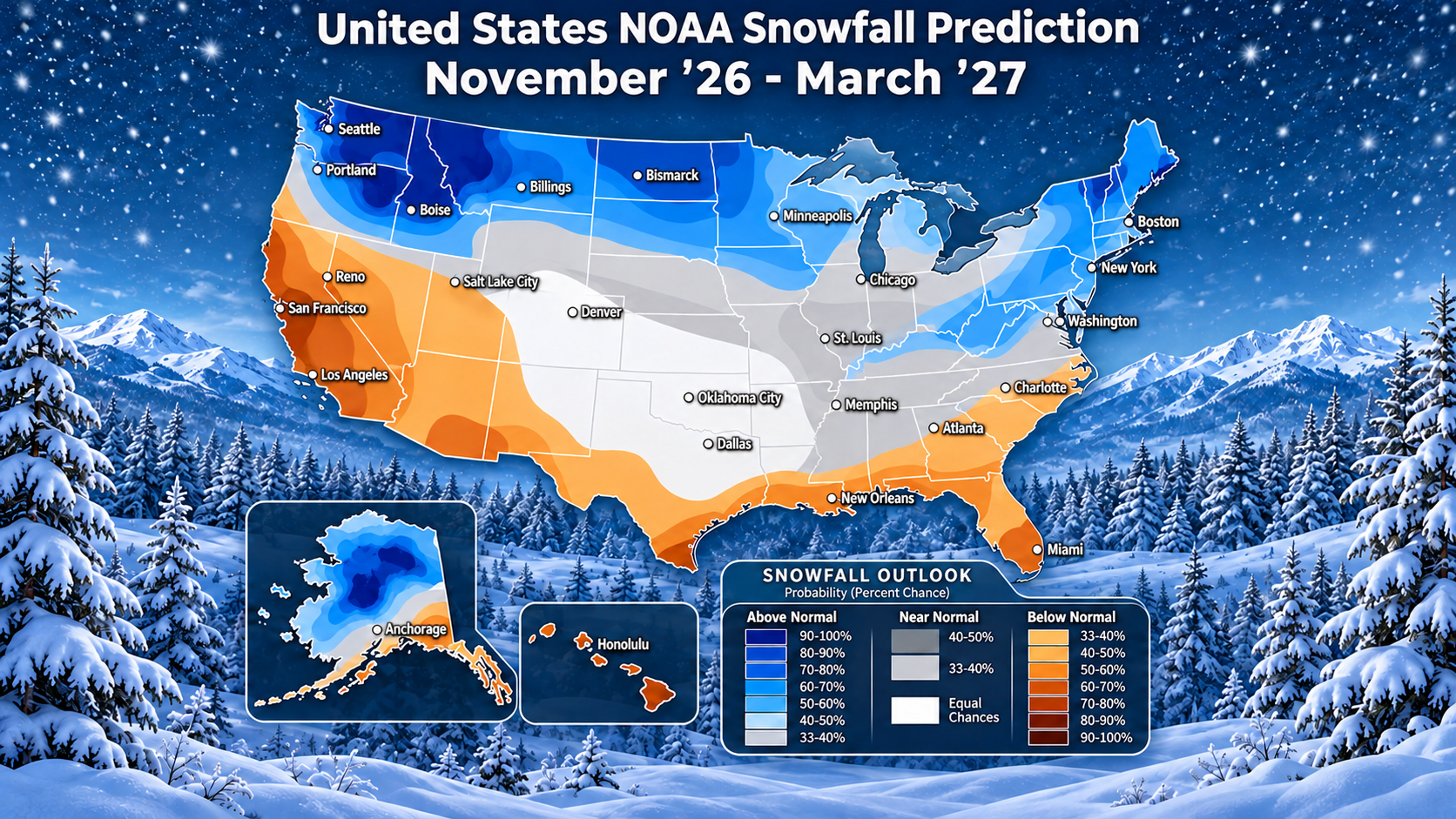
Information gathered from multiple locations made it possible to consider weather beyond the horizon of a single observer. For mountain communities, the study of snow would acquire particular urgency. In 1936, researchers established a snow laboratory on the Weissfluhjoch above Davos, an important beginning in the history of Switzerland’s Institute for Snow and Avalanche Research, the SLF. Snow became the subject of sustained measurement and investigation, with consequences for the understanding of mountain hazards. For skiing, these distinctions matter. An evocative winter prediction and an assessment of present mountain conditions serve very different purposes. Affection for the former can sit comfortably beside respect for the latter. Modern forecasting also asks us to become more thoughtful readers. A seasonal outlook describes probabilities across a broad period. NOAA’s monthly and seasonal outlooks address the likelihood of temperature and precipitation falling into different categories; they do not provide the date and depth of the storm that will transform a particular ski weekend.
Perhaps the most enduring lesson in weather prediction is learning to leave room for what remains uncertain. The book can be opened. The forecast can be studied. The preparations can be made. The mountain will still require our attention when we arrive. For all the changes in how weather is understood, the waiting remains familiar. Somewhere in New England, an almanac lies open beside a cooling cup of coffee. In a European mountain village, the upper slopes have disappeared into cloud. Each scene belongs to the same season of anticipation. Its appeal rests partly in the kind of attention it encourages. To turn its pages is to consider the year ahead, to remember that daylight changes, that cold returns, and that a landscape can be transformed while we sleep, and the season ahead gathers high in the mountains around the world.